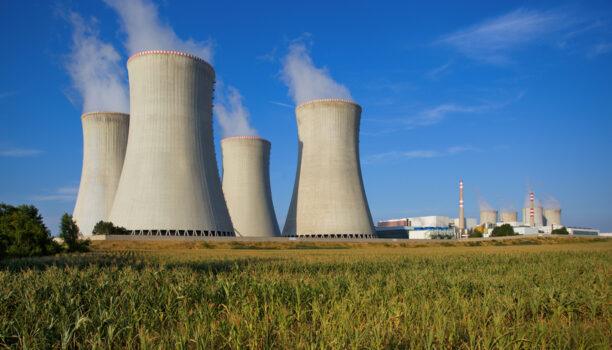
Industry sector: nuclear
Company activity: manufacture of steam generators and industrial nuclear steam boilers
Company type: major international group
Founding period: 1950s
Contact: process and tooling development manager
Company context
The company designs and manufactures nuclear boilers. In pressurized water reactor nuclear power plants, the heat generated in the reactor core is transferred via circulating water in a closed loop, known as the primary circuit, to a secondary circuit in which the water, converted into steam, drives turbines that produce electricity. The interface between the primary and secondary circuits is provided by steam generators.
The operation of these nuclear power plants produces liquid and gaseous effluents that must be treated, and whose composition must be regularly analyzed.
Filtration challenge
The client wanted to install an upstream filtration system to protect an effluent analyzer positioned on a bypass of an effluent treatment loop, composed in particular of oxalic acid and dissolved iron. These contaminants are treated by adding hydrogen peroxide (H₂O₂). However, this oxidative treatment produces iron oxide particles that precipitate.
The resulting solid disrupts the operation of the effluent analyzer and tends to clog the tubing. It was therefore essential to filter the effluents before they reached the effluent analyzer.
The filtration system had to operate under the following service conditions:
• flow rate: 40 L/min, i.e., 2.4 m³/h
• pressure: 2 bar
• temperature: 60 °C on average, with peaks up to 95 °C
• viscosity: close to that of water
Pemflow filtration solution
We recommended implementing a system consisting of a 5-inch filter housing, sufficient to handle the expected flow rate of 40 L/min, along with two polypropylene filter cartridges to retain the particles. One filter cartridge provides nominal depth filtration, while the other (pleated cartridge) provides absolute depth filtration.
The O-rings of the filter cartridges are made of VITON®, a fluorinated synthetic rubber coated with PTFE, due to the presence of H₂O₂.
Want to learn more about the differences between nominal filtration vs. absolute filtration? Read our article.
Expert advice
PTFE, or polytetrafluoroethylene, offers excellent corrosion resistance, even in the presence of chemically aggressive molecules such as hydrogen peroxide.
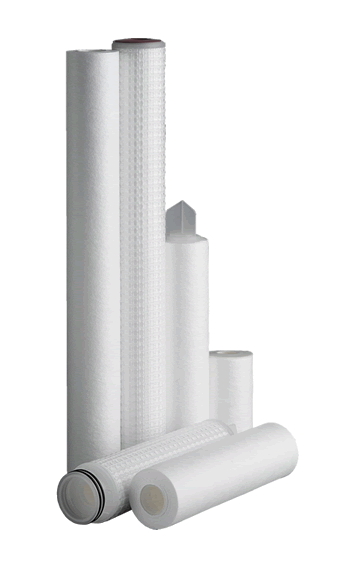
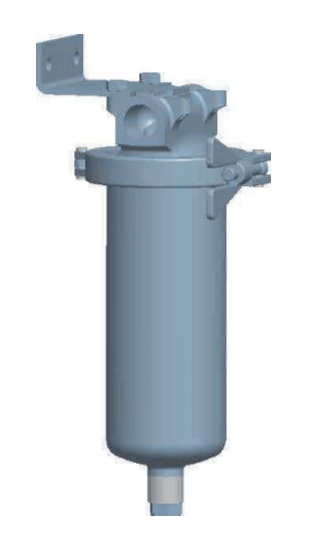
The selected filter housing features the following specifications:
• 316L stainless steel housing / ATEX
• 1” BSP inlet/outlet, with ¼” BSP-F drain and vent connections and a threaded plug
• VITON® gasket
The filter housing is supplied with a complete documentation package (3.1 material certificate + hydrostatic test report + certificates of conformity (CE, ATEX, and FDA)).

Contact a filtration expert
We are at your service
Our experts place their knowledge and expertise at your disposal for liquid filtration, air and gas filtration, decontamination, and separation technologies.