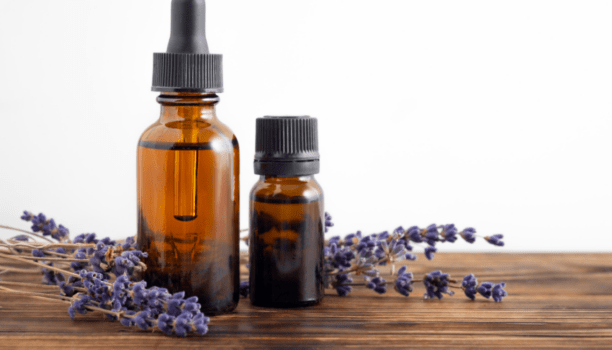
Business sector: Cereal crops (excluding rice), legumes and oilseed crops (NAF Code 2008: 0111Z)
Company activity: Essential oils production
Company type: French company
Company creation period: 2003
Contact(s): Process Engineer(s)
Company context
Our client, an essential oil producer, has established an agricultural operation dedicated to the distillation of organic herbs. Noting the variability of oils available on the market, the company developed innovative processes that ensure the integrity and potency of essential oils at every stage of production. It cultivates lavender, peppermint, lemon balm, clary sage, among others. Today, the company has become the global leader in wellness solutions.
Filtration challenge
For the production and packaging of floral waters, the company used a “homemade” system, consisting of 5 µm filtration followed by 1 µm filtration, and finally UV treatment.
Expert advice
Ultraviolet treatment requires a relatively short contact time. However, the effectiveness of this process is limited if the fluid contains organic matter or if the UV light dose is insufficient (end-of-life lamp, poor transmission).
The receipt of microbiological non-compliance reports following product returns led our client to reconsider its installation and to entrust a filtration system upgrade to a company with proven expertise in this field.
The entire system also had to be cleanable and sterilizable.
Pemflow filtration solution
Designed by our team, our solution immediately captured the full attention of the production department. The client was looking for a fully integrated filtration unit, compact, allowing continuous operation up to the supply of their hopper on the packaging line.
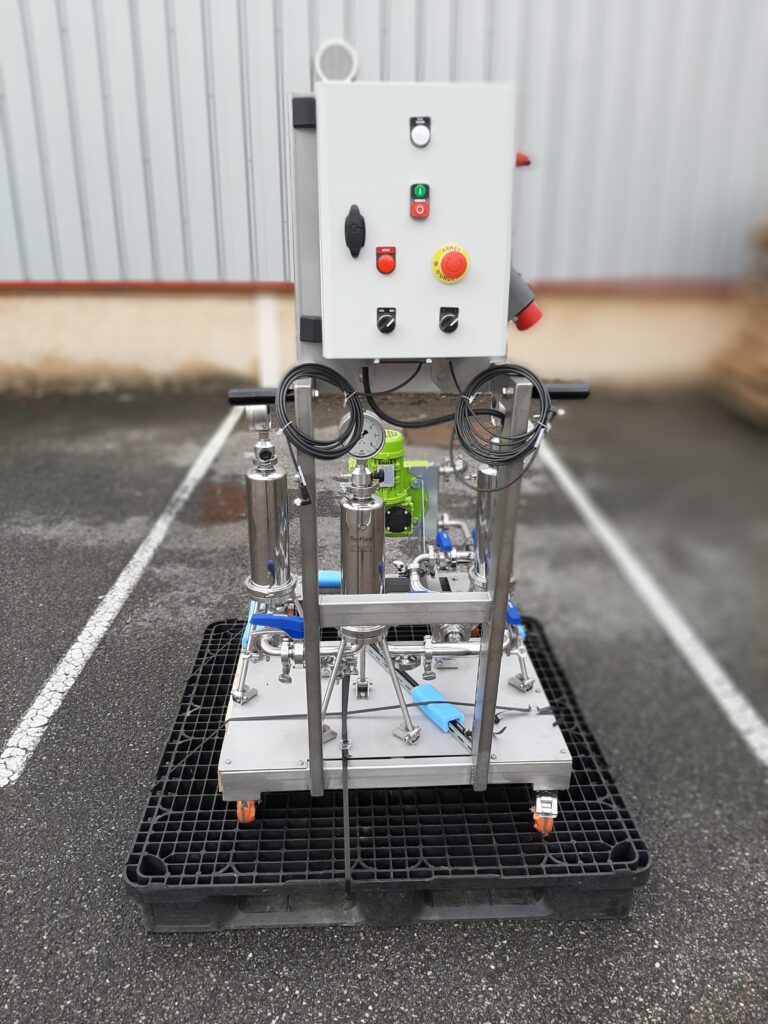
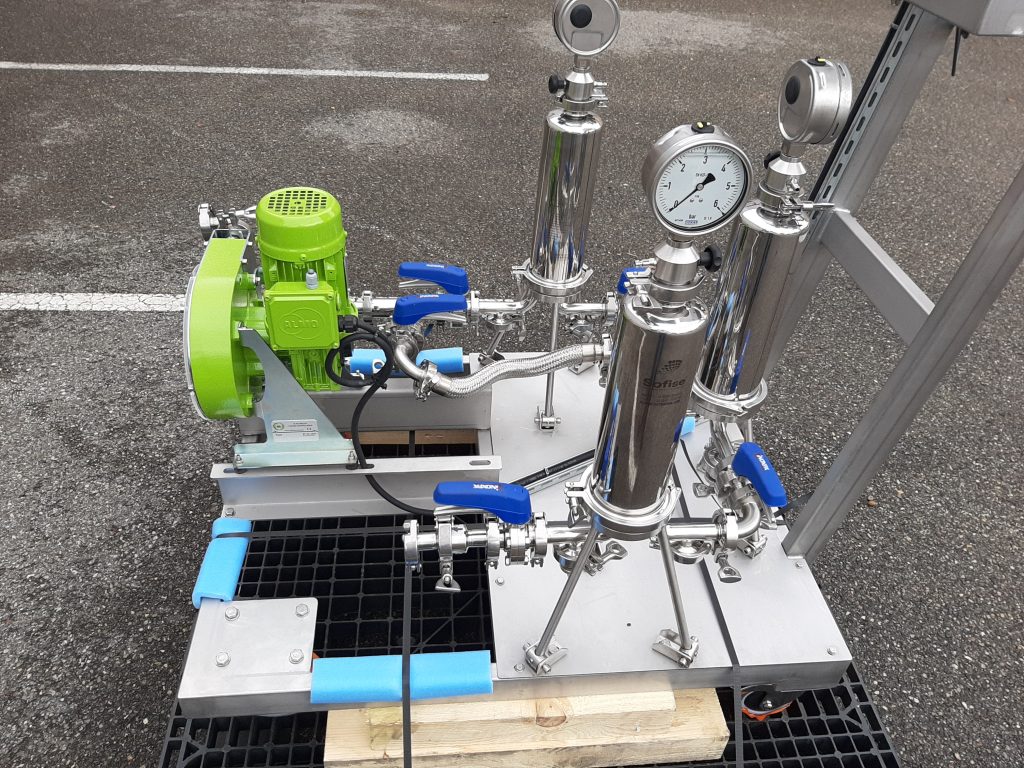
We therefore selected a filtration skid mounted on four antistatic casters, including two swivel casters, equipped with three filtration stages composed of AMAZON FILTERS filter cartridges.
Skid structure
The skid frame is made of 304 stainless steel and includes a containment tray. It is equipped with an electrical control cabinet (Start–Stop, Emergency Stop, thermal protection), a handling and maneuvering handle at operator height, a power supply cable, and four casters, including two antistatic swivel casters with grounding strap.
The skid comprises three 10’’ sanitary-type filter housings (bottom drains with clamp, top vent with pressure gauge) and the associated interconnecting pipework. A bypass was integrated only on the first housing, along with a check valve. At the company’s request, sanitary sampling points were also installed upstream and downstream.
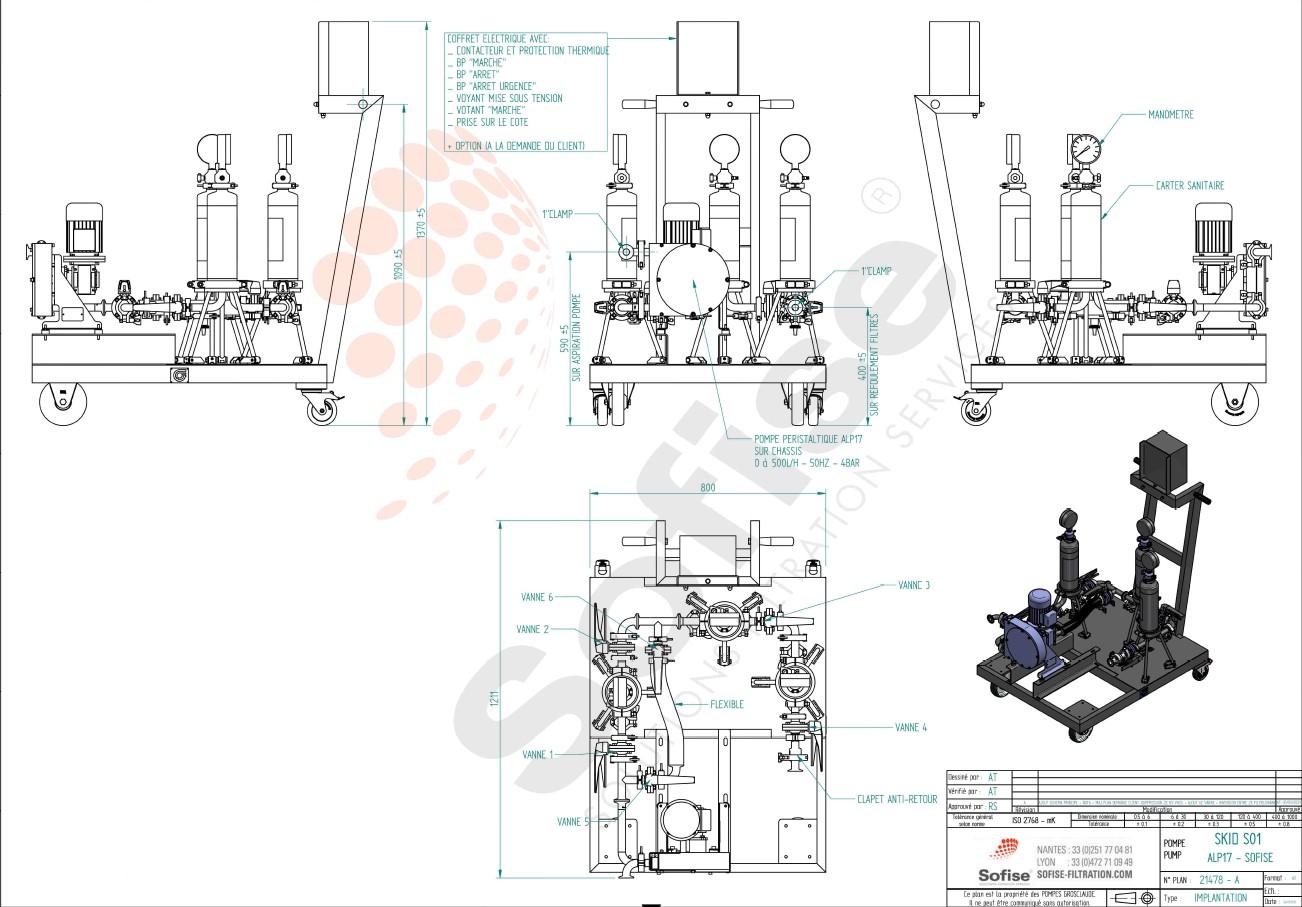
The fluid to be filtered is fed into the filter housings by a positive displacement pump.
Inlet/outlet isolation valves on the last filter housing, as well as pressure gauges and a valve on the vent port of each housing, complete our scope of supply.
Filtration sequence
The filtration sequence consists of three stages: a prefilter, an absolute filtration stage, and a sterile filtration stage.
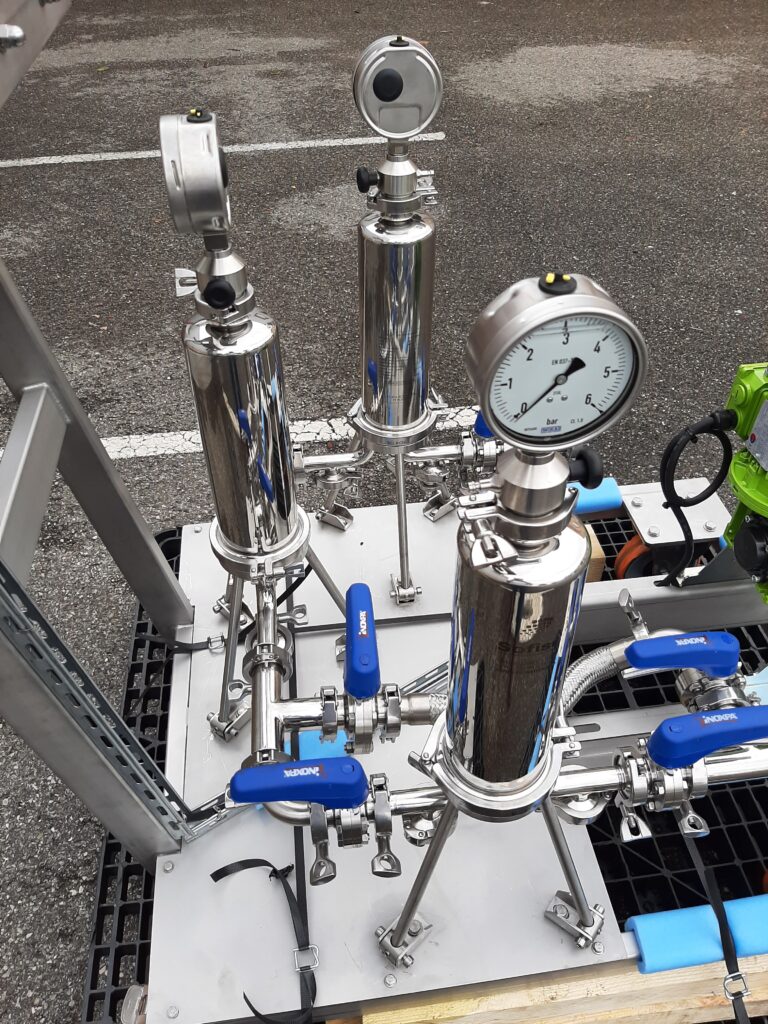
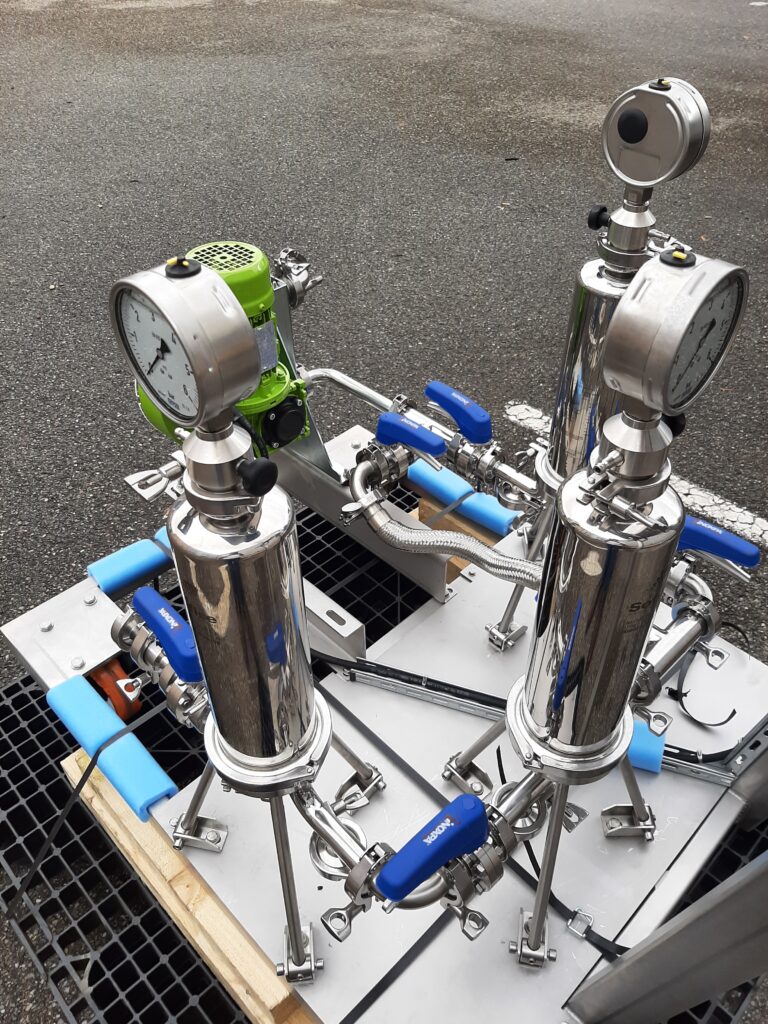

Prefiltration
• AMAZON FILTERS SupaPleat II model
• Absolute depth pleated filter
• 5 µm absolute (Beta ratio 5000)
• Glass fiber media / 100% polypropylene hardware
• Excellent dirt-holding capacity
Absolute filtration
• AMAZON FILTERS SupaPleat II model
• Absolute depth pleated filter
• 1 µm absolute (Beta ratio 5000)
• Melt-blown polypropylene media / 100% polypropylene hardware
• FDA – EC 1935/2004 compliant
• Compatible with multiple sanitization methods: steam, autoclave, hot water and chemical agents
• Batch traceability
Sterilizing filtration
• AMAZON FILTERS SupaPore VPW model
• Naturally hydrophilic PES membrane
• 0.20 µm Beverage Grade (LRV > 11 per 10-inch module)
• Polyethersulfone (PES) media
• Polypropylene support media
• EC 1935/2004 compliant
• Complies with food contact material requirements according to 21 CFR
• Meets USP extractables criteria
• Compatible with multiple sanitization methods: steam, autoclave, hot water and chemical agents
• Full traceability of all components

To note
Sterilizing filtration
The bacterial challenge is a logarithmic reduction value (LRV), measuring the efficiency of filters in removing microorganisms from a given suspension.
LRV (Log Reduction Value) = LOG10 (Number of upstream organisms / Number of organisms in the filtrate).
To be classified as a sterilizing filter, the logarithmic reduction must be greater than 7: LRV > 7.0 per cm².

Contact a filtration expert
We are at your service
Our experts place their knowledge and expertise at your disposal for liquid filtration, air and gas filtration, decontamination, and separation technologies.