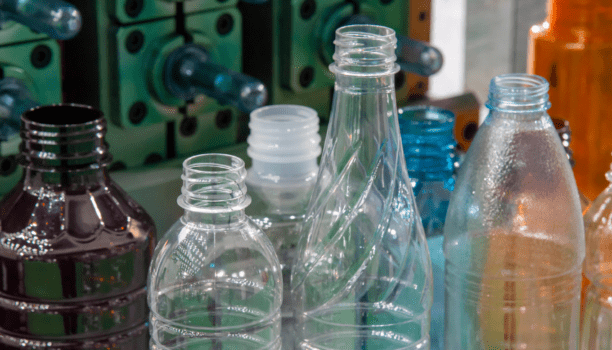
What is a resin? What precautions should be taken to filter this type of material? Which filters should be preferred? Pemflow takes a closer look at the topic.
Focus on polymer resins
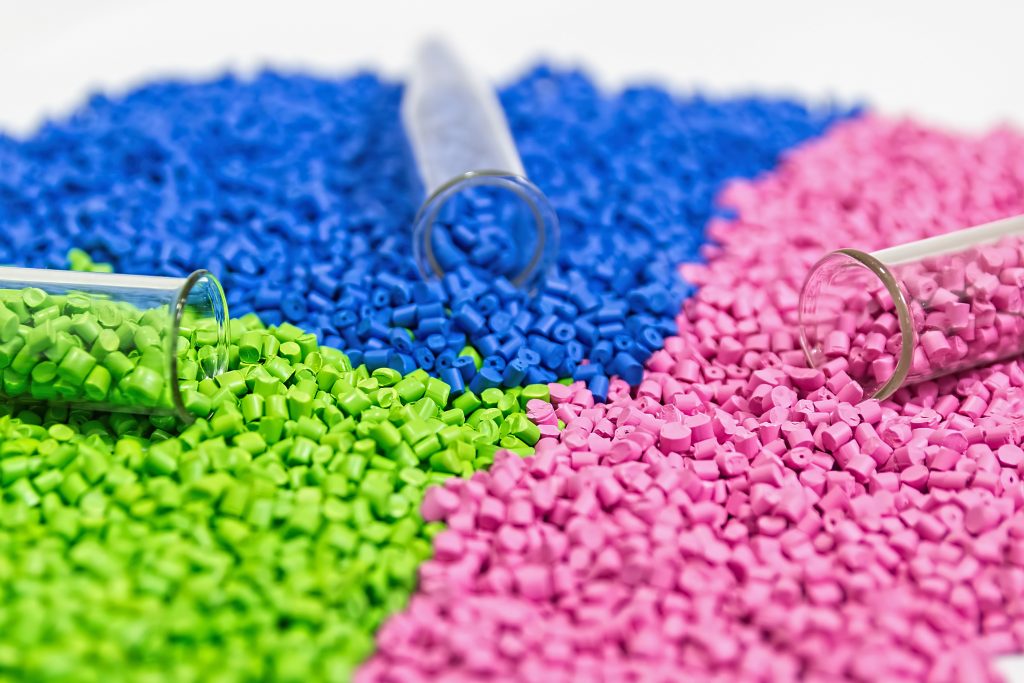
Resins are polymeric products used as base materials to manufacture, for example, plastics, textiles, paints (liquid or powder), as well as adhesives, varnishes, and polymer foams.
They are composed of macromolecules.
Depending on the nature and structure of the polymers they are made of, they are thermoplastic or, conversely, thermosetting:
a thermosetting resin is composed of linear chains crosslinked together. These chains are linked in space by strong covalent bonds. They therefore form an insoluble and infusible three-dimensional network.
a thermoplastic resin is composed of linear or branched chains. Within the resin, these chains are linked together by so-called “weak” bonds (Van der Waals forces and hydrogen bonds). Thermoplastic resins can be dissolved in certain solvents and soften when heated, hence their name.
Dedicated filtration solutions
Plastics are manufactured from resins, to which adjuvants and additives are added: solvents, calcium fillers, organic pigments, antioxidants, surface modifiers (for example to smooth the resin), blowing agents (to obtain cellular materials), flame retardants, antistatic agents, fungicides, etc. Depending on their role or nature, they exert a physical, chemical, or physico-chemical action within the polymer.
Thermosetting resins are generally processed by reaction injection molding. The polymers they contain combine during the curing process to form a permanent chemical bond. They polymerize irreversibly.
The resulting thermosetting plastics exhibit good resistance to chemical attack, high heat resistance, and good mechanical strength. They are frequently used in the machining of plastic parts, due to their resistance to deformation and impact. Among thermosetting polymer plastics, examples include epoxies, phenolic compounds, silicones, and polyesters.
Thermoplastic granules soften when heated and become increasingly fluid with temperature. They have much lower melting points than thermosets. They are molded by extrusion and blow molding. The curing process is fully reversible. This characteristic allows thermoplastic materials to be remolded and recycled without degrading their physical properties. The plastics obtained are therefore flexible plastics. Depending on their processing, thermoplastics can be used for various low mechanical stress applications: manufacture of plastic bags, films, bottles and containers, components for the electronics industry, etc. Among thermoplastic polymers, examples include polyethylene, PVC, and nylon.
Demanding materials
Polymer resins are materials that must be handled with care so as not to alter their properties and, ultimately, those of the finished plastic products. The machining processes implemented must therefore be perfectly controlled. Filters are used throughout the entire process.
Highly viscous, resins are also sensitive to temperature and chemical attack. They are likewise very sensitive to the presence of impurities. They may, for example, contain unpolymerized monomers, catalytic residues, or various dust particles, which must be eliminated. In some cases, they must undergo a washing step.
To obtain high-quality fibers, with low breakage and high yield, the polymer melt must be homogeneous, without gel formation and without significant local concentration effects. It is therefore essential to avoid, during filtration stages as well as throughout the entire production line, the formation of polymer aggregates.
Another critical point is the shear rate, which must be controlled, particularly during filtration steps. If it is too high, it will modify viscosity and alter the resin structure, and therefore the properties of the manufactured plastic material.
In terms of filtration, the challenge is therefore significant in industries that process resins.
Learn more about viscosity and shear
Dedicated filtration solutions
To meet these various constraints, filtration systems composed of metallic filter elements can be used, in the form of fibers, meshes, or powders, for example. Robust and well suited to the filtration of viscous fluids, they do not release impurities.
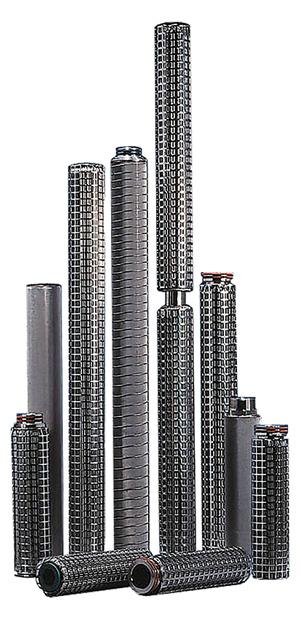
The use of metal powders, for example, makes it possible to produce highly uniform and corrosion-resistant filter media, in stainless steel or in innovative nickel-based alloys such as Hastelloy®. This type of media is used, for instance, to manufacture cylindrical filter elements that provide effective depth filtration with a long service life. These filters are notably used in the production of polypropylene films.
Candle filters, consisting of metallic filter elements (in stainless steel or other alloys) in tubular form—the candles—mounted vertically in parallel within a pressurized vessel, represent an interesting option. A rotating plate brings the candles one after another in front of the fluid inlet orifice to be treated.
For hot filtration applications involving very high-viscosity plastic polymers, a different geometry can be adopted, favoring metallic disc filters. The stainless steel discs are stacked one above the other on a shaft, inside a pressurized vessel. The filtration cake, containing the retained impurities, forms on the filter plates; the filtrate is drawn inward before being collected. These metallic disc filters can be cleaned by washing or vibration.
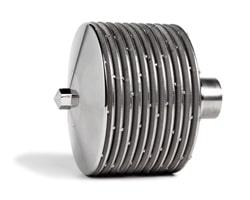
The large filtration surface limits pressure drop and prevents denaturation of the polymers to be treated. Their performance is very high, with, for example, filtration ratings between 5 and 40 µm. They are notably used in the manufacture of polyethylene terephthalate (PET) packaging films and electronic chips.
Find an example of filtration in a polymer production circuit
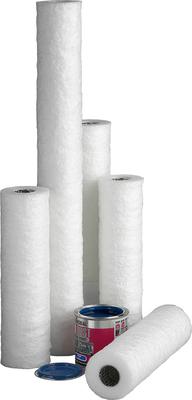
As an alternative to metallic filters, cartridges featuring a rigid structure based on meltblown technology—also used to manufacture filtering masks—can be used. These cartridges are specifically suited to the filtration of high-viscosity fluids, and therefore of certain polymers. This process makes it possible to obtain an extremely robust filtration media structure. This strength is essential to prevent deformation under high differential pressures often associated with high-viscosity fluids.
Find an example of polyester resin filtration using a VisClear II meltblown cartridge

Contact a filtration expert
We are at your service
Our experts place their knowledge and expertise at your disposal for liquid filtration, air and gas filtration, decontamination, and separation technologies.