
Cross-contamination, what is it?
In industry, contamination refers to the accidental introduction of impurities into the raw materials used to manufacture the finished product, or into the finished product itself. These impurities may consist of inert particles or substances presenting a chemical or microbiological risk. Contamination may occur in the raw material, in an intermediate product, during production, sampling, product packaging, or during maintenance operations.
Cross-contamination, or cross contamination, occurs when the pollution originates from another product or substance used within the same production facility. This situation may arise in the pharmaceutical industry, for example, on a production line where different medicines are manufactured.
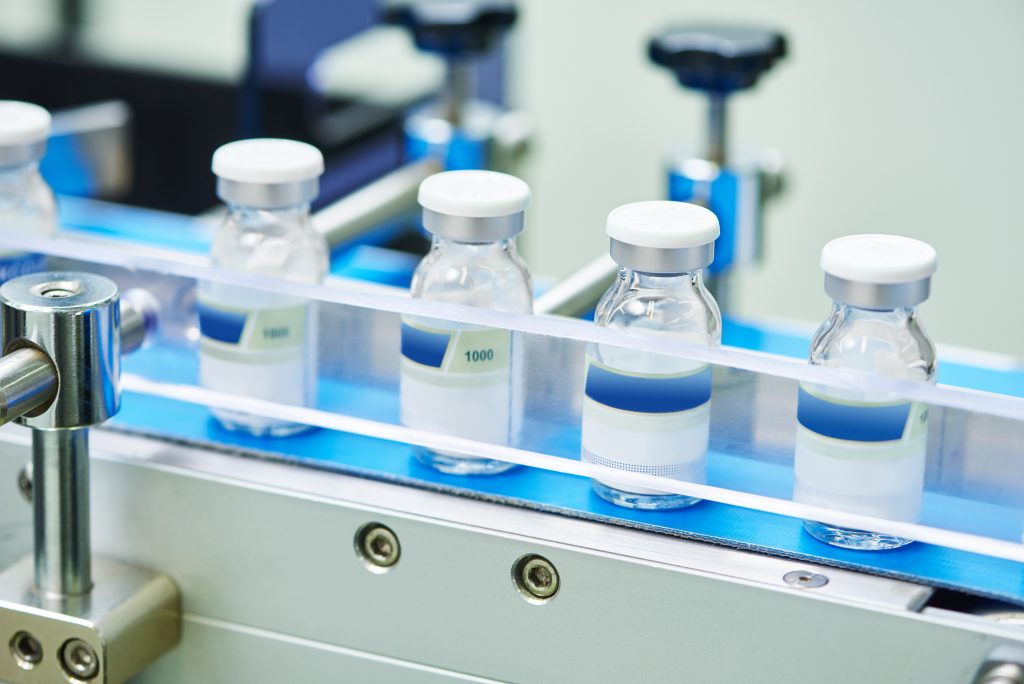
In practice, cross-contamination may be either successive or simultaneous.
Successive contamination may occur when equipment is not dedicated to a single product. The product being manufactured may then be contaminated by residues from the previous one, trapped for example in containers, pumps, or filters.
Simultaneous contamination, on the other hand, occurs when different products are manufactured at the same time in adjacent areas of the production site. Pollutants may be unintentionally transferred by personnel during their movements, or via the surface of produced batches or any other equipment moved within the facility.
What are the consequences?
Contamination leads to defects in the quality of the finished product, which may require it to be declared non-compliant with the specifications.
In the pharmaceutical industry, cross-contamination impairs product quality, with a potential impact on patient safety: alteration of the expected pharmacological effect, occurrence of an undesirable pharmacological or toxic effect, modification of the medicinal product’s stability, etc.
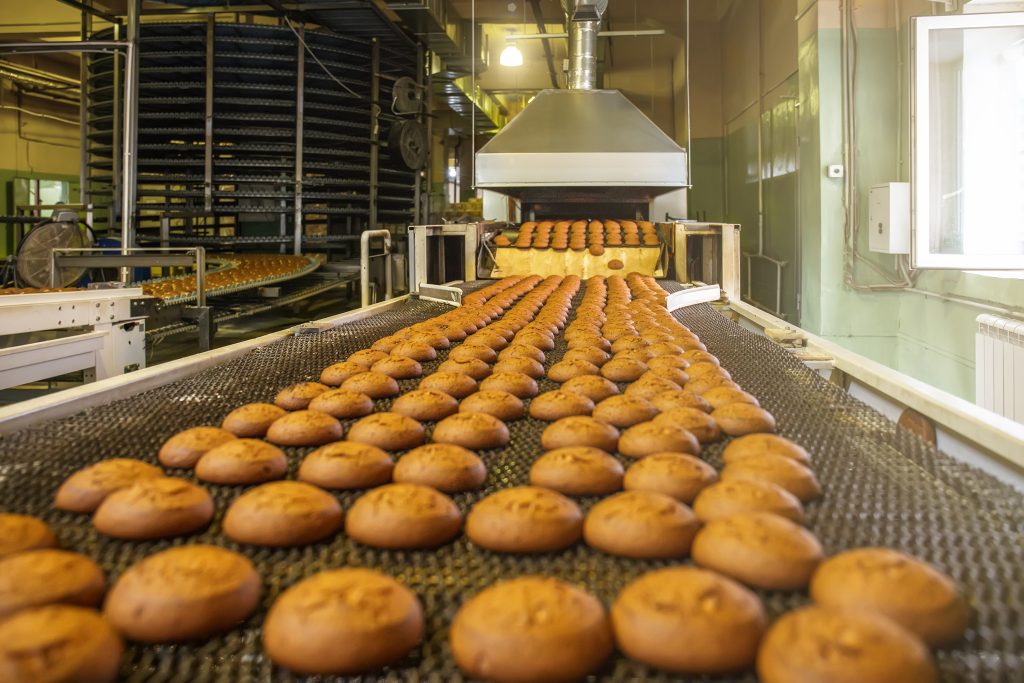
In the food industry, the issue of cross-contamination must also be taken very seriously. This is the case, for example, when standard products and gluten-free products are manufactured within the same production unit. Cross-contamination may occur when a food or gluten-free product is exposed to an ingredient or a food containing gluten. In addition to the usual precautions (cleaning of installations and in particular filtration devices, management of “with gluten” and “gluten-free” flows, use of appropriate and dedicated protective equipment by personnel, etc.), it is also necessary to monitor ambient air quality and filter it, as it may contain dust originating from airborne food particles.
In other industrial sectors, such as inks, paints and coatings, cross-contamination between products must also be strictly avoided. The implementation of filtration systems within these production lines therefore represents a real challenge. The difficulties mainly concern maintenance operations or those involving the replacement of one filter with another depending on the products to be filtered. The issue is even more critical in facilities producing inks or paints in different colours, in small batches and on an occasional basis, which requires frequent changes of the filters used and their storage for later reuse.
To prevent cross-contamination, it is possible to select a filtration device that enables contained filtration of the fluids to be treated, for example in ink and paint production. This approach consists in isolating both the product and the filter within a sealed enclosure. In practice, conventional cartridges are used and enclosed in a sealed plastic bag system (antistatic polyethylene) before being installed as a whole into the housing, most often made of stainless steel. The SupaClean system, developed by Pemflow in partnership with the manufacturer Amazon Filters, supports temperatures of up to 70 °C with a maximum differential pressure of 2.5 bar.
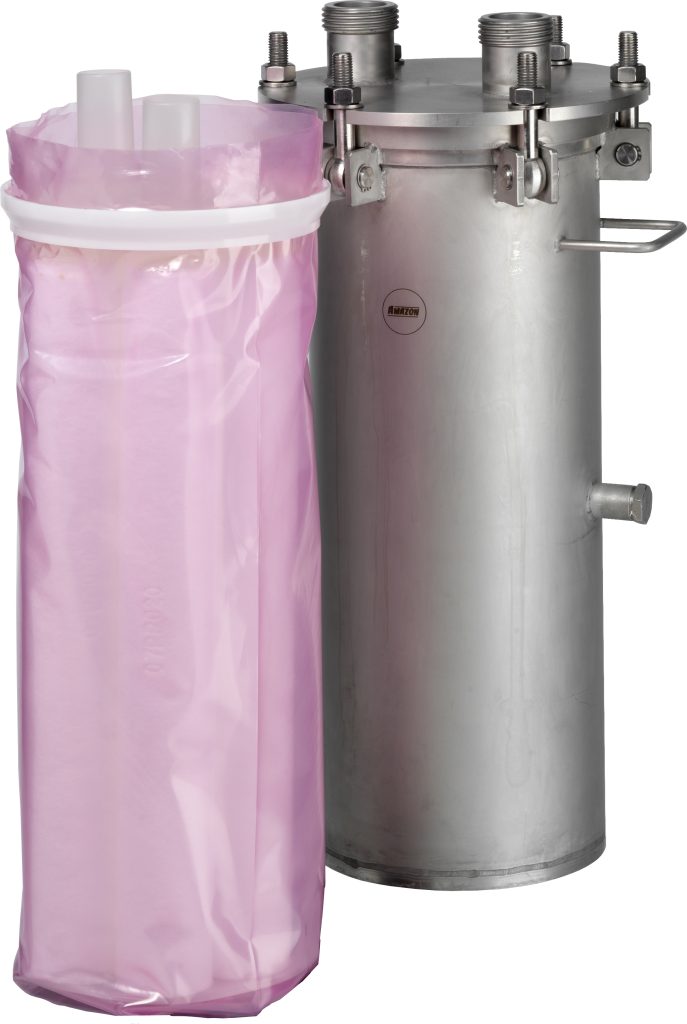
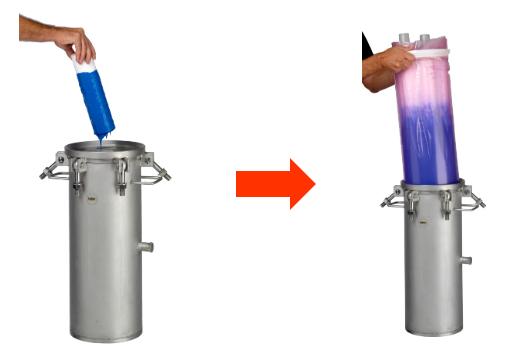
These systems, which can be custom-designed, allow the use of a wide range of filter cartridges of different sizes and in many absolute ratings, depending on your requirements and the products to be filtered:
- Nylon media cartridges, to minimise fibre release
- Absolute-rated depth cartridges, offering high dirt-holding capacity together with very low pressure drop,
- Cartridges providing a density gradient, with a large void volume, ensuring low pressure drop and excellent retention capacity.
To find out more about contained filtration and the SupaClean cartridge
When particular attention must be paid to ambient air quality, in the pharmaceutical or food industry, it is essential to select the appropriate dust collector, for example by adopting dust filtration bags suitable for food contact.
In cleanrooms, used in pharmaceutical production, the quality and purity of ambient air are also critical. It is necessary to simultaneously prevent particulate and bacteriological contamination, whether exogenous or generated within the cleanroom itself (in particular cross-contamination).

Contact a filtration expert
We are at your service
Our experts place their knowledge and expertise at your disposal for liquid filtration, air and gas filtration, decontamination, and separation technologies.