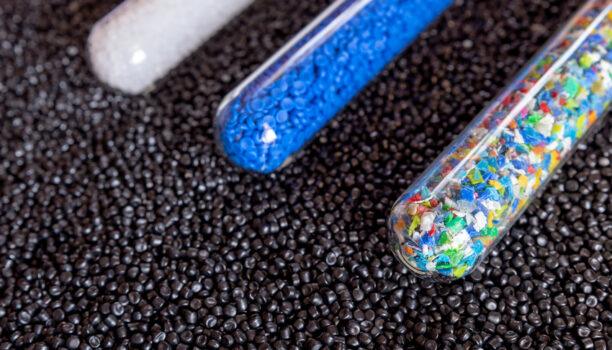
Bottles, packaging films, thermoplastics… the synthetic materials processing industry uses filters in numerous processes. These are essential for producing high-quality plastics with good throughput and controlled operating and maintenance costs.
These filtration devices must be chemically compatible with the materials to be filtered — PET (polyethylene terephthalate), PP (polypropylene), cellulose acetate, nylon, etc. — as well as with the solvents involved. They must also withstand wide temperature and pressure ranges and be capable of handling fluids with sometimes very high viscosity. Metallic filter media are excellent candidates for meeting such demanding specifications.
Plastics
Plastics are synthetic polymeric materials composed of macromolecules. Each polymer is an assembly of small molecules, called monomers, which bond together to form a long chain. The viscosity and mechanical strength of a polymer increase with the degree of polymerization, meaning the length of the chains.
Polymers exhibit viscoelastic behavior: they possess both elastic properties and a viscous character. Elastically, they deform under stress and quickly return to their original state once the stress is removed—a property used in industry to shape them.
In terms of viscosity, molten polymers are shear-thinning. At rest, they exhibit an organized structure that creates resistance to flow. Flow forces the chains to orient parallel to one another, resulting in reduced overall resistance and therefore lower viscosity as shear increases.
Polymers can be classified into two categories based on their response to elevated temperature:
Thermosets (three-dimensional polymers), which crosslink and harden during their first heating cycle.
Thermoplastics (linear polymers), which melt above a given temperature.

Specific constraints in filtration
Defects may appear in synthesized polymers. They are generally caused by the presence of contaminants (particles, fibers, or inclusions). During processing, certain polymers may also locally gel due to excessive temperature, stagnation zones, or the presence of impurities (organic contaminants, catalyst residues, etc.). Filters are therefore essential on plastic manufacturing lines.
The shear-thinning properties of plastics have major implications for processes (injection, extrusion, thermoforming, molding, etc.), as does their thermal behavior. Polymer processing machinery—and particularly filtration devices, whether candle or disc type—must take these characteristics into account.
Candle filters
Candle filters consist of tubular metal filtration elements, all of identical dimensions, mounted vertically in parallel inside a pressurized vessel. A rotating plate positions the candles (made of stainless steel or other alloys) one by one in front of the inlet through which the fluid enters. A flow-distribution device ensures proper allocation of the incoming fluid across the candles. Commercial systems typically offer filtration ratings ranging from a few micrometers to several hundred micrometers.
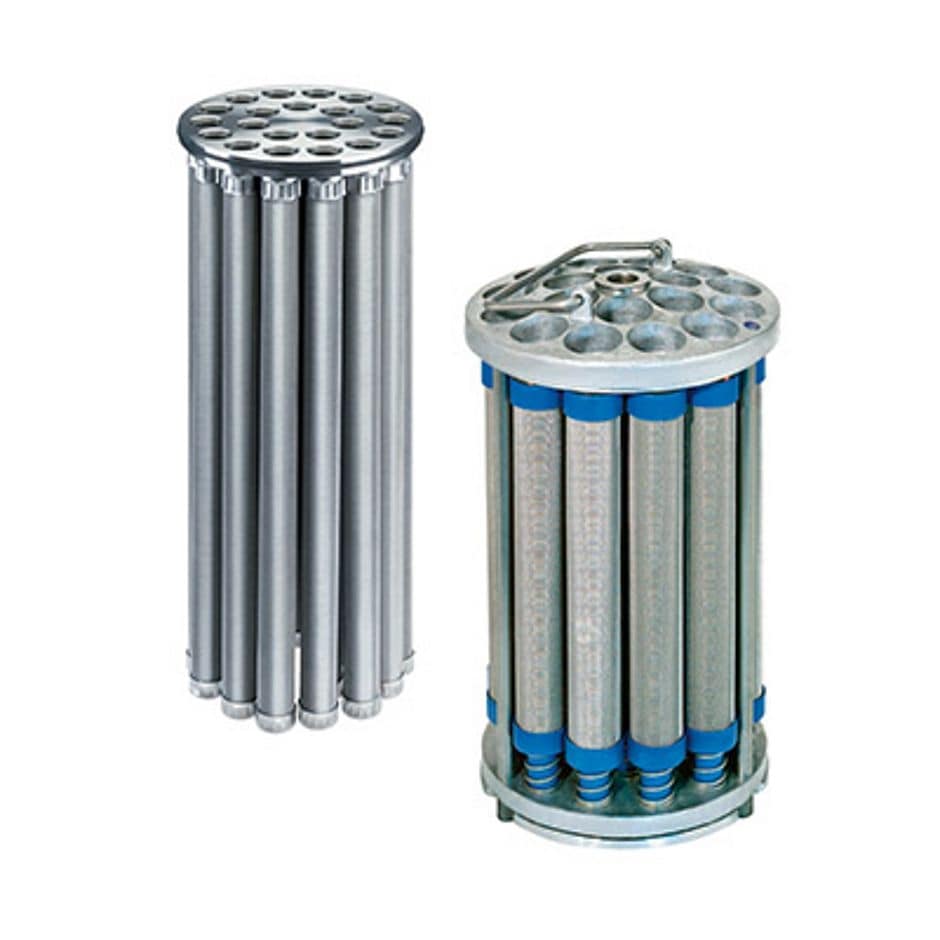
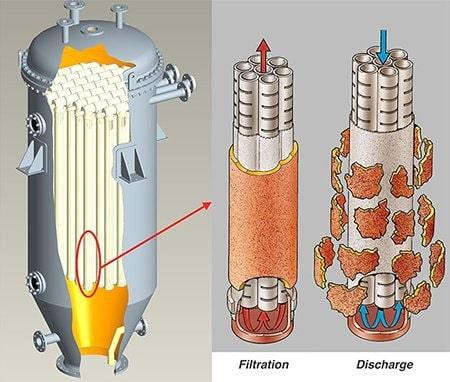
The filter cake, meaning the retained residues and solid particles, gradually forms on the outside of the candles, while the filtrate is collected and directed to the next stage of the process.
The candles feature narrow internal passages to prevent stagnation zones.
This geometry provides a large filtration surface area within a compact housing.
The candle elements can be cleaned multiple times by backflushing or by immersion in a cleaning bath, and reused. They can also be replaced individually when required.
Expert advice
Candle filters are available in standard formats, but can also be custom-designed to fit any housing.
Discover an example of filtration in the polymer industry
Disc filters
For hot filtration applications involving highly viscous polymers, metal disc filters are used. The discs, often made of stainless steel, are mounted one above the other on a shaft inside a pressurized vessel. The filter cake forms on the filter plates, while the filtrate is drawn inward before being recovered. The filter elements can be cleaned by vibration or washing.
These filters offer excellent control of the fluid being treated by ensuring a steady flow and outstanding impurity retention, with contaminants captured within the cells of the filter media. Their geometry minimizes pressure drop thanks to the large filtration surface area, and prevents degradation of the polymers being processed. Their performance is very high, with filtration grades typically ranging from 5 to 40 μm. They are used notably in the production of PET packaging films and PEEK (polyether ether ketone) electronic chips.
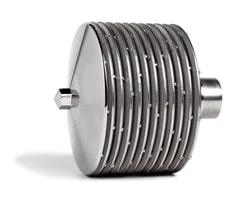
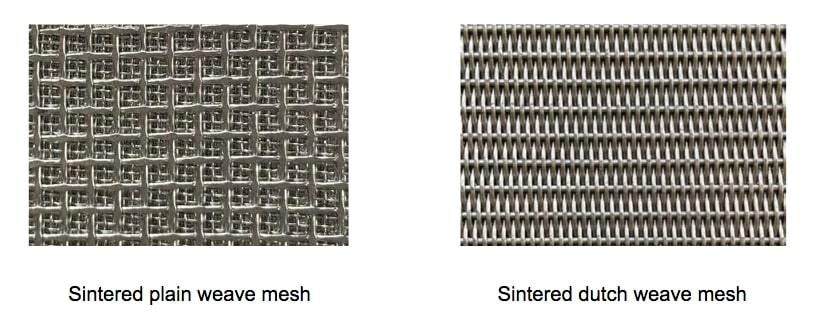
Depending on the design, the filtering discs are made either from metal fibers woven in different patterns or from metal powder. In the first case, the selected mesh determines both the filter’s operating conditions and its performance.
Expert advice
Sintered metal-powder filter discs are available in a wide range of diameters (typically 0.5–200 mm).

Contact a filtration expert
We are at your service
Our experts place their knowledge and expertise at your disposal for liquid filtration, air and gas filtration, decontamination, and separation technologies.