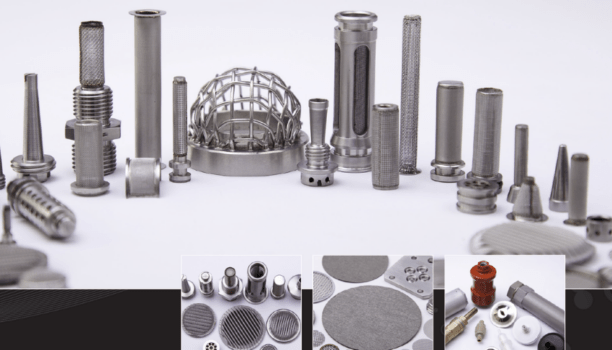
Last chance filters are used as complements to the main filtration systems. They are designed to remove and retain contaminants such as manufacturing chips, wear debris, and degradation products from fluids—whether generated during operation or introduced downstream of the primary filtration stages. They are therefore not intended to purify the fluid itself, but rather to protect a sensitive component in case something deteriorates elsewhere in the upstream circuit. Their role is to stop any particle that could cause immediate damage to the system it is about to enter.
Where should “last chance” filters be installed?
To ensure maximum protection, these “last chance” filters must be positioned as close as possible to the component being protected. Ideally, they should be custom-made so that their characteristics and dimensions match the existing equipment as closely as possible. They are then designed to interface with the client’s current production-line units and are sometimes even integrated directly into the valves.
Highly diverse geometries, compositions, and applications
Last chance filters may take the form of metal disks, either flat or pleated. They may also be designed as cartridges inserted directly into existing piping, or as tubular elements. In this case, they are manufactured using techniques such as micro-resistance welding, fusion welding, laser drilling, or injection molding of thermoformable materials.
Last chance filters can be produced from various materials: metals (in fiber or powder form) such as stainless steel, or composites, polypropylene, nylon, PTFE, etc. They are used in hydraulic or pneumatic systems, in systems involving fuels or lubricants, in inkjet printers… Here are a few examples.

Example 1: woven-metal mesh disks for hydraulic systems
These disks may be either flat or pleated. They are very commonly found in gas and liquid filtration systems.
Manufactured from stainless steel and lightweight, they can be used across a wide temperature range (–270 to 450 °C). They are easy to clean and generate only minimal pressure drop.
Example 2: metal-powder disks for chemical analysis systems
Other filter disks are manufactured from metal powder. Powder metallurgy techniques make it possible to produce these porous disks with interconnected porosity and densities ranging from 35 to 75%. Porous sintered-metal disks are available in various standard micron-class grades, with different pore sizes. Such filters are used, for example, in chromatography columns in laboratory environments.


Example 3: filters for inkjet printers
These filters are manufactured from inert materials with as few extractables as possible to ensure that the ink remains uncontaminated. They are compact so they can be installed inside the smallest printer housings and are supplied with a range of compatible connectors.
They must provide sufficient flow rates and limit pressure drops to ensure reliable and consistent printing performance while offering maximum protection for the printhead. Operating temperatures range from 0 to 50 °C, with pressures up to approximately 3 bar.
These filters are generally made of stainless steel, which is chemically compatible with volatile inks. They remove all residual contaminants from the fluid before it reaches the printheads, thereby protecting them.
Expert advice
These filters are available in various filtration ratings, typically 5, 15, 25, and 40 µm.
Example 4: valve protection in the semiconductor industry
Last chance filters are also used in the microelectronics industry to protect valves, pressure or flow regulators, and other components—for example in gas pumps or vacuum-generation systems. For optimal chemical compatibility, they are often made of stainless steel, which also provides high mechanical strength and allows them to operate across wide temperature and pressure ranges.

Expert advice
Their efficiency can reach 99.95% at 0.4 μm.

Contact a filtration expert
We are at your service
Our experts place their knowledge and expertise at your disposal for liquid filtration, air and gas filtration, decontamination, and separation technologies.