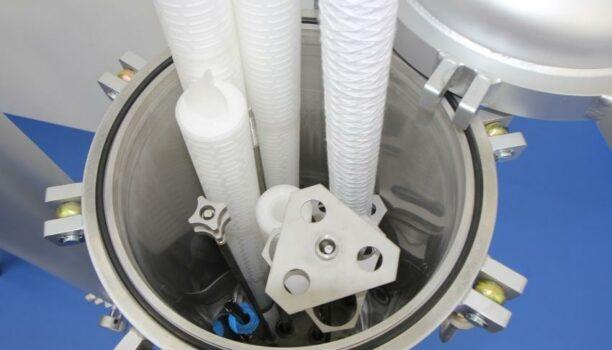
In the pharmaceutical, biotechnological, cosmetic and food industries in particular, and more generally in any industry deploying critical filtration processes, selecting the most appropriate filtration sequence is essential. The choice of filters to be implemented on the production line (which filter technologies? which dimensions? in what order?) determines the quality of the final product as well as the associated cost. How should you choose your filtration sequence? Why is proper filter sizing critical? Are there easily deployable solutions to diagnose your filtration requirements?
Choosing a filtration sequence: a necessity
To determine which devices should be installed at the various filtration points of your system, testing must be carried out using filter discs made of different materials and featuring specific filtration characteristics. This is a heavy and time-consuming trial process, involving a large number of flow studies and numerous qualitative and quantitative validations. Choosing the appropriate filter type for each filtration stage is not sufficient; particular attention must also be paid to proper sizing.
Find out more about filters used in the pharmaceutical industry
Focus on sizing
In these industrial sectors, correctly sizing the filters to be installed is indeed crucial, both to guarantee filtration quality and to control associated costs.
Undersized filters will generate high initial pressure drops and will need to be replaced very frequently, resulting in high maintenance costs and potentially production shutdowns. When filters are undersized by mistake or sometimes to reduce initial investment, the flow rate treated per unit of filter surface area becomes too high, leading to premature filter clogging. On average, for a given flow rate, undersizing a filter by a factor of 2 reduces its service life by a factor of 3. This is therefore far from insignificant!
Find out more about filter clogging issues
However, correctly sizing filters is complex. The solution selected will obviously depend on how they are used over time: continuous operation or, conversely, limited use for batch processing. Beyond these considerations, several factors must be taken into account, including initial differential pressure, the concentration and nature of the impurities to be filtered, space constraints related to the installation, and of course the flow rate of the fluid to be treated, as well as its temperature, viscosity, etc.
Portable kits: a turnkey solution
There are filter selection kits that make it possible to define the most appropriate filtration sequence and ultimately optimise your filtration processes.
A dedicated solution that allows selection of the most relevant filtration sequence (pre-filter / final filter combination) for a given fluid.
Easy to use, these selection kits deliver particularly reliable results. They enable efficient determination of the sequence and sizing of the filters to be installed, whether for a new installation or for the modernisation or upgrade of an existing production line. Compact in design, they can be deployed even in the most confined spaces.
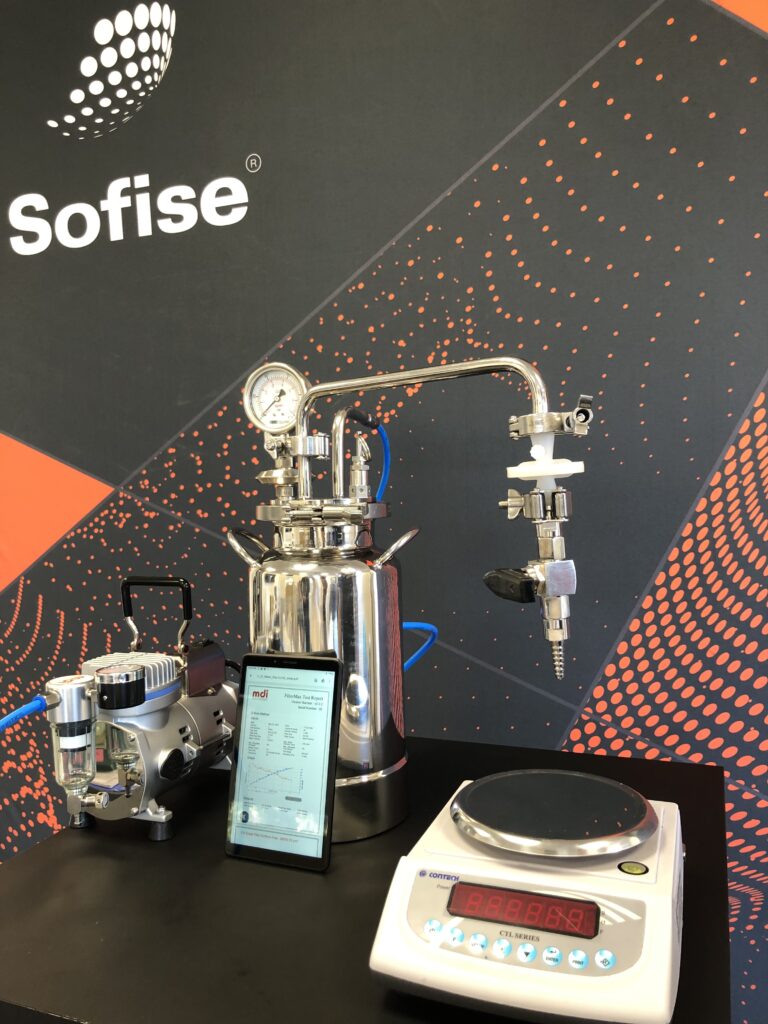
These kits notably offer the following features:
- Selection of the most efficient filtration sequence
- Calculation of the optimal size of the filters corresponding to the process
- Improvement of existing filtration sequences (cost, treated flow rate)
- Filterability testing
They typically consist of the following components:
- A 3 L pressurised vessel (SS 316L) with pressure gauge
- A pump
- Filter holders (25 and 47 mm)
- A balance (3 kg) with wireless connection
- An application software for carrying out the tests and, most often, an associated device (tablet, for example)
- Various assembly components: tubing, clamps, etc.
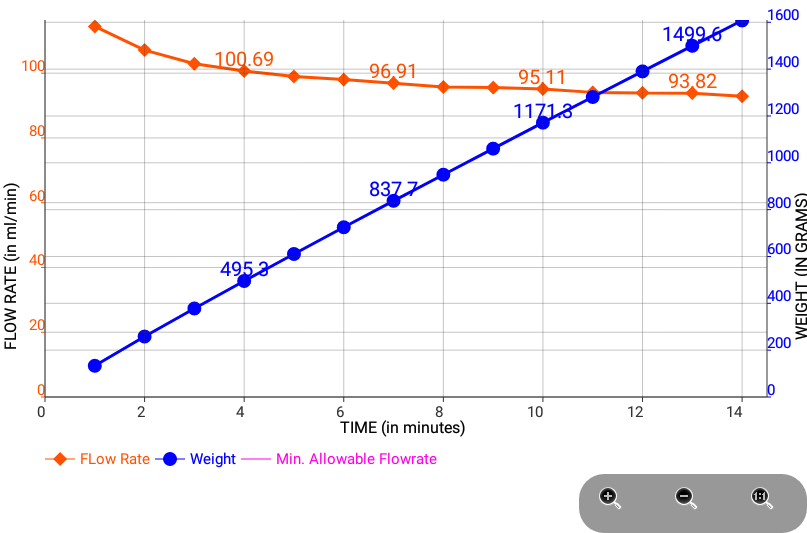
Select a kit equipped with a touchscreen tablet that is easy to use and enables wireless data transmission (Wi-Fi to a laptop or printer). The installed software must allow various tests (automatic or manual) to be carried out and automatically calculate the filtration surface area required to filter the desired volumes.

Contact a filtration expert
We are at your service
Our experts place their knowledge and expertise at your disposal for liquid filtration, air and gas filtration, decontamination, and separation technologies.