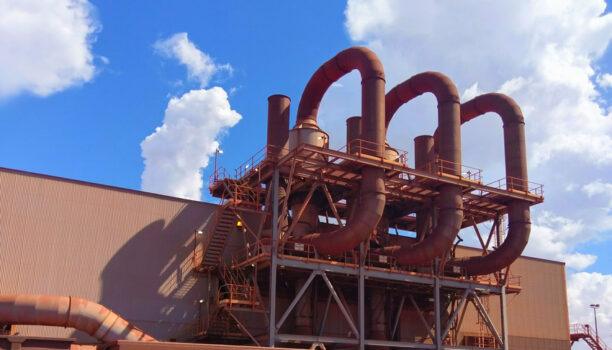
For industrial operators, ensuring ambient air quality on production sites is essential. However, many processes involving the handling of powders and dry products generate dust and emit polluting, toxic, or explosive substances. Filtering ambient air is therefore essential to protect employee health, safeguard production equipment, prevent contamination, and preserve the environment. While industrial dust collection is a cross-cutting issue, each industry sector has its own specificities and constraints.
Agriculture and food industry
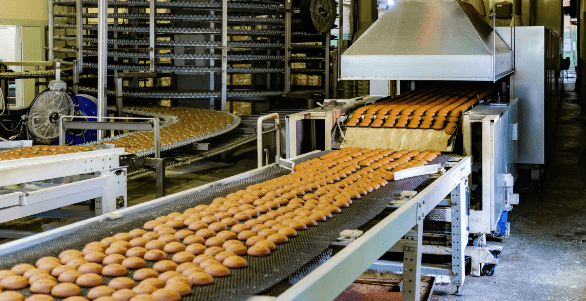
The agricultural and food sectors make extensive use of filtration systems to remove dust from ambient air, with several objectives: limiting the loss of valuable material, preventing cross-contamination, ensuring strict compliance with sanitary regulations relating to food products, preserving the quality of the atmosphere in which operators work, recovering waste, and preventing the occurrence of potentially explosive atmospheres…
In the agricultural sector, the cereal and seed industries are particularly concerned. In the food industry, this notably includes plants that process and package cereals, spices, cocoa beans, etc. These dust collection solutions are based, depending on the case, on integrated dust collectors or bag-type systems.
Pharmaceutical industry
In the pharmaceutical and cosmetic sectors, ambient air quality is also critical. Many processes implemented along the pharmaceutical production chain can generate dust: grinding, mixing, granulation, sieving, drying, coating, compression, sampling, packaging, etc. As in the food industry, polluted ambient air can lead to cross-contamination issues or compromise the bacteriological quality of manufactured products. The presence of APIs in ambient air must also be strictly controlled to limit occupational exposure risks. Finally, pharmaceutical dusts are often combustible. Reducing their concentration in ambient air therefore helps to limit explosion and fire risks.
Metallurgy
The metallurgy sector and the machining of mechanical parts generate metal particles, for example during polishing, buffing, or cleaning of metal parts, which must be filtered. Their collection is often a complex operation, as these small metal fragments are frequently projected at high speed. It is therefore necessary to use properly positioned extraction hoods to collect these dusts. It should also be noted that some metallic materials may be toxic.
Plastics processing and paint manufacturing
The plastics and rubber industry notably generates fibrous dusts, which are difficult to filter. These fibers can become trapped between the pleats of conventional cartridge filters: the associated pressure drops are then significant and filter cleaning is difficult. This must therefore be taken into account when selecting the dust collector used to treat ambient air.
In the paint industry, finishing is often carried out by spraying wet or dry paint. However, when solvent-based or water-based paints are sprayed, large quantities of mist rich in fine particles are generated. Combined with solvents, these particles form a hazardous mixture that is flammable, explosive, and potentially toxic.
Glass manufacturing
All types of glass are produced from crushed, weighed, mixed, and melted materials. The materials used in this industry—sand, limestone, sodium carbonate, cullet (broken glass), and oxides—are generally highly abrasive, and the processes involved generate very high dust loads. In ceramics manufacturing, certain additives additionally produce dusts with hygroscopic properties. These form agglomerates, which complicates their removal. Metal oxides, for their part, can cause respiratory disorders.
Cement plants
The manufacture of cement (grinding, crushing, conveying, etc.) releases large quantities of particles into the ambient air, with potentially harmful effects on operator health. Effective dust and fume extraction systems must therefore be installed on these industrial sites.
Wood industry
The wood industry generates dust. Wood dust is flammable. Depending on the species, it can be toxic to humans (causing asthma or having carcinogenic properties). Finally, the presence of residual dust on machined wood surfaces can compromise subsequent varnishing or lacquering operations. It is therefore imperative to collect these wood particles, especially since, depending on their size, they can be recovered and valorized on a secondary market.
Paper industry
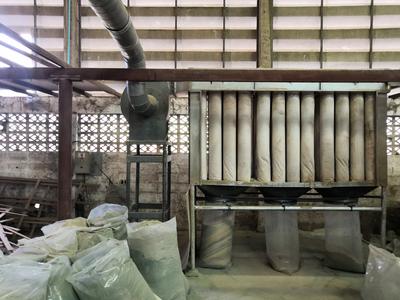
Industrial paper manufacturing processes generate paper fibers and cellulose dust. To capture fine particles, which can cause respiratory issues and mucous membrane irritation, it is necessary to implement dedicated dust extraction and filtration systems. Airborne paper dust also presents an explosion risk.
Composite machining
An increasing number of products are made from composite materials. Cutting, grinding, machining, and polishing operations on these materials release dust, particles, and fibers that are potentially explosive. Often very fine, these dusts, particularly glass fiber, can penetrate the lungs and also cause allergic skin reactions.
Electronic
In the electronics sector, producing in clean conditions is imperative. In this industry, air quality must be controlled, just as it is in the food or pharmaceutical industries, for example. Airborne molecular contamination significantly affects the productivity and quality of manufactured electronic components. Working in a controlled atmosphere (gray room or cleanroom) makes it possible to ensure process reliability.
Learn more about filtration solutions to prevent micro-contamination in microelectronics
Textile industry
Two categories of fibers are used in the textile industry: natural fibers (cotton, linen, hemp, etc.) and synthetic fibers. The textile industry generates fine, long, and clogging dusts.

In addition to the losses in productivity they cause by generating machine breakdowns, these fiber residues are potentially responsible for occupational diseases, particularly affecting the respiratory system. The chemical agents used to prepare and treat textiles (dyes, UV-resistant treatments, biocides, waterproofing agents, water repellents, inks, etc.) are indeed harmful to health, whether through skin contact or inhalation of the product itself or the emitted dusts. Filtering and purifying textile production sites is therefore essential.

Contact a filtration expert
We are at your service
Our experts place their knowledge and expertise at your disposal for liquid filtration, air and gas filtration, decontamination, and separation technologies.