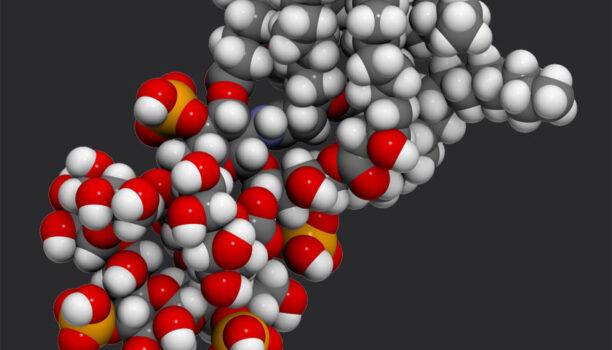
Harmful to the human body, endotoxins present in pharmaceutical water networks must be eliminated.
Where do they come from? Why are they difficult to filter or destroy? What are the most effective technical solutions for endotoxin retention?
Where do endotoxins come from?
Endotoxins are molecules found in the outer membrane of certain Gram-negative bacteria, such as Escherichia coli or Salmonella. Specific to the bacterial species they originate from, they are released during cell lysis, meaning when these bacteria are destroyed.
From a chemical standpoint, these bacterial membrane residues are mainly composed of amphiphilic lipopolysaccharides, combining a lipid with a complex sugar. Their molecular weight typically reaches several hundred thousand Daltons.
Water-soluble and highly heat-resistant, endotoxins cannot be destroyed by a 30-minute exposure to boiling water. Only certain oxidising chemical agents, such as peroxides or hypochlorite, are capable of degrading them.
What are the risks of endotoxin exposure?
Endotoxins are detected and targeted by the immune system. Exposure to these substances can therefore have severe — even fatal — consequences.
They can disrupt haemostasis and cause vascular damage, leading to a sharp drop in blood pressure, potentially resulting in death. Endotoxins may also cause high fever.
In the pharmaceutical sector, 99.9% of detected pyrogenic substances are endotoxins. It is therefore essential to implement effective methods for the retention or destruction of these toxins within pharmaceutical water circuits.
Why conventional filtration is insufficient for endotoxin retention
The retention capabilities of standard filters are largely insufficient to stop endotoxins. Conventional filtration thresholds of 0.2 or 0.1 µm are far too high to capture these molecules.
To compensate for this limitation, it is possible to use filter membranes with a positively charged surface, which retain endotoxins — negatively charged — through electrostatic attraction.
However, this method has a major drawback:
all bacteria, microorganisms, biofilm residues and mineral particles that carry a negative charge will also adhere to the membrane — regardless of their size.
As a result, the membrane becomes rapidly saturated and therefore ineffective.
Ultrafiltration and distillation: costly methods for endotoxin removal
Distillation and ultrafiltration can be used to retain or eliminate endotoxins. However, both methods require significant capital investment and lead to high energy costs.
Ultrafiltration of endotoxins, which relies on membranes with very low molecular weight cut-off thresholds (below 10,000 Daltons), typically requires the use of high-capacity feed pumps. It also demands very frequent membrane monitoring and results in significant water loss, as the entire retentate is rejected.
An innovative solution for endotoxin retention: hollow fibre cartridges
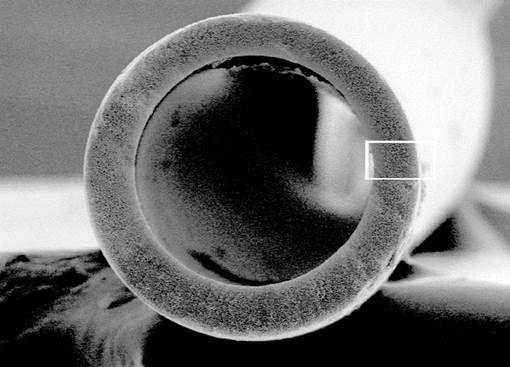
An effective alternative to charged membrane filtration consists in retaining endotoxins not through electrostatic attraction, but by exploiting the chemical affinity of polysaccharides for certain materials.
This is the solution used in FiberFlo® hollow fibre frontal filtration systems, manufactured in Polyphen.
This filtration method is economically advantageous:
- It returns the full input flow, just like other frontal filtration technologies
- It works with low-capacity feed pumps
- For a given filter element size, it offers a filtration surface up to 3 times greater than pleated membrane filters
- Most importantly, it provides unmatched and selective endotoxin retention (validated up to 1 or 5 EU/mL depending on configuration, with monitoring via LAL test, detection threshold 0.06 EU/mL)
Hollow fibre cartridges are, for example, used during the final rinsing of vials intended for parenteral solutions.
Contact a filtration expert
We are at your service
Our experts place their knowledge and expertise at your disposal for liquid filtration, air and gas filtration, decontamination, and separation technologies.