Industry sector: production of medicinal plant derivatives
Company activity: packaging, distribution, and marketing of aromatherapy and phytotherapy products
Company type: SME
Company creation period: 1990s
Contact person(s): industrial director, production manager
Compagnt context
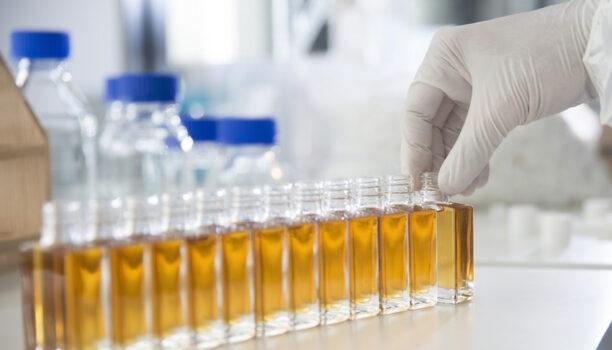
The company extracts and packages various products derived from the plant world, such as essential oils and floral waters. These hydrosols are obtained by distilling different plants or flowers (cornflower, rose, lavender, witch hazel, thyme…). They are used in the production of organic aromatherapy or phytotherapy products. Floral waters are also used in the composition of flower essences known as Bach Flowers—intended to harmonize emotions—and propolis, a substance made from resinous materials collected by bees from certain tree buds, rich in flavonoids beneficial to humans.
Before packaging, floral waters must be filtered (to remove residual pieces of branches, leaves, and petals) and sterilized to eliminate any bacterial contamination. These are delicate solutions that can easily be altered and lose their properties without suitable sterilizing filtration.
Filtration challenge
The client wanted to replace their existing floral-water filtration system with a sterilizing filtration skid, meaning a mobile filtration solution combining a pump with a complete filtration train. They were therefore looking for a custom-designed system that could be moved easily, ensured low operating costs, and preserved the properties of the floral waters being processed.
Pemflow filtration solution
Thanks to our expertise in sterilizing filtration and in the design of filtration skids, as well as the experience gained supporting other clients working with hydrosols, we were able to design and implement a custom filtration solution tailored to the client’s needs. We proposed a mobile filtration skid mounted on a 304 stainless-steel frame, equipped with a retention tray (30 mm high), and incorporating a pump and three stages of cartridge filtration.
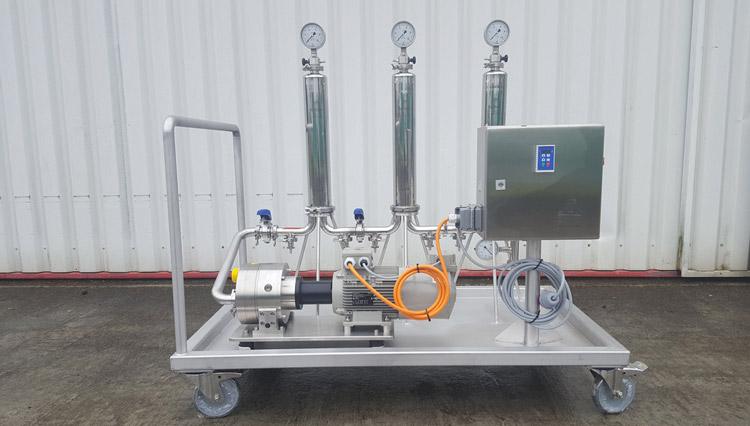
Three technical points required particular attention on our part, along with in-depth discussions with the client to clearly identify and best meet their needs.
Choice of pump technology
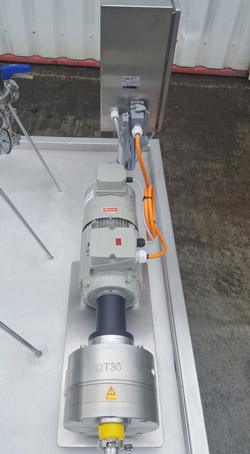
We considered two options: a conventional “progressive cavity” technology (eccentric helical rotor pump) or a Quattroflow 4-piston diaphragm pump. We selected the latter, a technology originating from the biotechnology sector. Self-priming and capable of running dry, it…cette pompe à diaphragmes ne dénature pas les liquides par cisaillement, mêmes les plus fragiles, et peut être utilisée avec des pressions jusqu’à 6 bar.
Expert advice
Four-piston diaphragm pumps are unique devices, inspired by the functioning of the human heart, and avoid the drawbacks of conventional pumps. Like the myocardium, this diaphragm pump contains four valves that alternately allow the fluid to pass. Fluid circulation through the valves is controlled by the movement of a diaphragm, which intermittently presses on the valves to regulate their opening.
Choice of filtration housing type
Instead of using a standard filter housing, we selected a sanitary housing. Free of any retention zones, it can be cleaned optimally and offers a surface roughness below 0.8 µm. The absence of retention zones also guarantees the elimination of cross-contamination risks when switching batches.
Choice of filtration ratings
These ratings were defined based on our experience with hydrosol filtration.
For the first stage, we selected a filter cartridge providing nominal filtration with a 20 µm rating. The arrangement of thermally bonded fibers creates a true density gradient that ensures depth filtration. Its structure provides a large void volume and minimizes pressure drop while offering excellent retention capacity.
The second filtration stage uses a pleated filter cartridge, delivering absolute depth filtration at 3 µm. It offers a large filtration surface, again with low pressure drop and excellent retention capacity.
The third and final stage is sterilizing filtration, achieved with a PES membrane filter cartridge, biological grade, with a 0.2 µm rating.
Expert advice
PES (polyethersulfone) is a hydrophilic material. PES filter cartridges offer high flow rates and low adsorption of active ingredients. They are designed for critical applications such as the retention of microorganisms or ultra-fine particles.
This turnkey mobile filtration skid fully satisfied the client. They appreciated that the filtration cartridges installed on our skid are far easier to replace and maintain than the filter plates used in many filtration systems found on other sites performing the same type of production.
Discover more case studies in the cosmetics industry:
• Ensuring the bacteriological quality of floral waters and essential oils
• Implementing a sterilizing filtration solution for a cosmetics wholesaler
• Lower-cost, rapidly available filters: a concrete case in the cosmetics industry

Contact a filtration expert
We are at your service
Our experts place their knowledge and expertise at your disposal for liquid filtration, air and gas filtration, decontamination, and separation technologies.