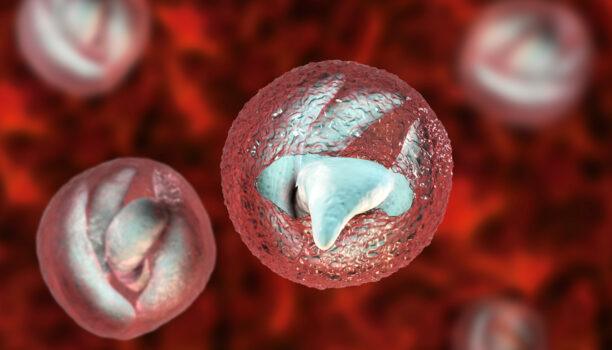
Cryptosporidiosis is a diarrheal disease caused by a microscopic parasite, Cryptosporidium. It can be transmitted directly from person to person, through contact with infected animals, or by ingesting contaminated water or food. It is therefore essential to monitor water quality, particularly its Cryptosporidium content, in order to implement appropriate treatment processes when needed—chief among them, filtration.
Focus on Cryptosporidium
These oocysts are shed in the feces of infected humans or animals, thereby contaminating the environment. This is the form of the parasite responsible for transmitting cryptosporidiosis. The oocysts are resistant to both heat and cold.
When stored in an aqueous solution at room temperature (15 to 20 °C), they remain viable for more than three months and can survive for over a year in seawater.
Their thick wall allows them to persist for long periods in the environment and to withstand common chlorine-based disinfectants, including bleach. Absolute filtration is therefore a powerful tool for preventing this type of contamination.
Which filters should be selected?
Although Cryptosporidium oocysts measure between 4 and 6 µm, they can deform and pass through retention filters with a cut-off rating greater than or equal to 3 µm. To effectively retain these parasites, it is therefore recommended to select a filtration system with a cut-off rating less than or equal to 1 µm.
Learn more about filter efficiency
Expert advice
Filters available on the market provide, at 1 μm, an absolute retention rate greater than 99.98% (ß > 5000).
To remove Cryptosporidium oocysts from water used in food, beverages, and industries requiring ultrapure water, pleated polypropylene or nylon 6 filter cartridges are used.
They contain a filter media with a graded fiber density. The cartridge fibers are continuously thermally bonded to the central core to limit fiber release.
During filter manufacturing by extrusion, fiber diameter is controlled to produce multiple filtration grades. The void volume left between the interlinked layers is maximized to ensure high dirt-holding capacity and low initial pressure drop.
Combined with a large filtration surface area, this depth filtration mechanism with graded density provides exceptional oocyst retention capacity while maintaining high flow rates.
These filters are produced without surfactants to minimize extractables. They withstand high temperatures (130 °C), allowing them to be sterilized as often as necessary.
Their endcaps are welded directly onto the filter cartridge for enhanced safety and durability.
Expert advice
It is essential to avoid the release of Cryptosporidium oocysts caused by biofilms present in water-treatment installations, particularly within filtration devices or in the distribution network itself.
Such filtration devices are implemented when it is critical to remove Cryptosporidium from the water.
This is the case in many industries: production of mineral water or other bottled beverages, wash water used in the food industry to prepare items such as fruits or salads, and drinking-water fountains.
Expert advice
The filters used to eliminate Cryptosporidium oocysts also ensure the retention of another pathogenic enteric protozoan, Giardia.

Contact a filtration expert
We are at your service
Our experts place their knowledge and expertise at your disposal for liquid filtration, air and gas filtration, decontamination, and separation technologies.