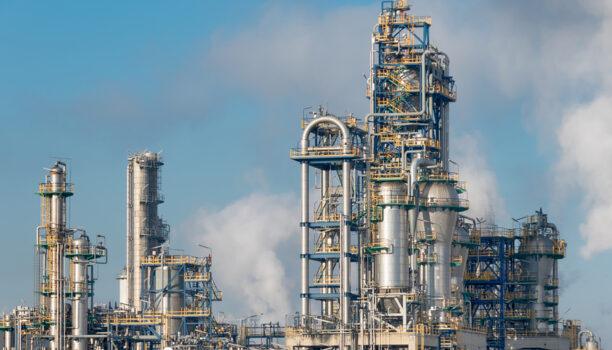
The production of fuels or polymers relies on industrial filters with highly diverse characteristics that must comply with strict regulatory standards for safety and environmental protection. From upstream to downstream in the production chain, it is therefore essential to be able to filter very different liquid or gaseous substances.
Filtration issues in petrochemicals specific to each field
In petroleum refineries, the purity of the fuel produced is critical. In the polymer industry, filtration devices are used from the moment raw materials are introduced into the intermediate reactor, and then at every stage of synthesis: polymeriser, mixer, extruder, etc. The substances to be filtered display highly diverse rheologies (water, solvents, highly viscous molten polymers) and chemical compositions: polypropylene, polyester, polyethylene, polyamides, polyurethane, acetates, silicone, and more.
Expert advice
In the polymer industry, filter cartridges often need to be made from a material capable of withstanding the severe operating conditions present along the production line: high pressure and temperature, and corrosion from chloride ions, among others.
Fuels: from extraction to the pump
In refineries, diesel, gasoline, fuel oil, liquefied petroleum gas, and kerosene are produced. To achieve this, the fuel industry relies on upstream filters (water injection, protection of reverse-osmosis membranes, process water) and downstream filters (gas separation, amine reduction, catalyst beds, etc.).
In oil production, water is also frequently used to maintain pressure and increase productivity. Particular attention must therefore be paid to its quality, whether fresh or seawater. Water may contain algae or plankton, silt, and other sediments that can significantly affect installation performance.
Fuels are generally stored in large tanks before being transported to their final destination via pipelines or tankers. During storage, these products accumulate debris such as rust and fine particles, which can create problems upstream of distribution points, damage end-user equipment, or even degrade final product quality. They must therefore be filtered and homogenised before delivery to remove any contaminants and residual water.
As a result, filtration solutions based on metallic or polymer media, most often custom-engineered, must be implemented.
Polymer industry: producing plastic fibres with high purity levels
Production of PET and PP fibres, PET for plastic bottle manufacturing, thin packaging films, technical thermoplastics, or X-ray films all relies on multiple filtration stages during polymer melting to transform raw material into the final plastic. To obtain high-quality fibres with minimal breakage and high yield, the polymer melt must be homogeneous, free of gels, and without significant over-concentrations.
Current metallic and polymer filtration media technologies improve performance while reducing operating costs. For example, metallic filtration media are used in the form of pleated and cylindrical filters, capsule filters, or disc filters. These filters are supplied with a variety of end-cap materials to fit all existing filter-housing and tank configurations.
Expert advice
Filter cartridges made from woven Inconel® 600 fibers offer excellent corrosion resistance.
Find an example of isobutene filtration
Find an example of filtration on a polypropylene production line

Contact a filtration expert
We are at your service
Our experts place their knowledge and expertise at your disposal for liquid filtration, air and gas filtration, decontamination, and separation technologies.