Correct filter sizing is essential to ensure filtration (and operating) costs are minimised. Undersized systems lead to high initial pressure drops, short service life, and ultimately operator dissatisfaction.
The sizing approach will vary depending on whether the application involves long-term use or whether the filter is intended only for short-term operation — for example, in batch processing.
Failing to take these differences into account results in poorly specified systems and higher-than-expected operational costs.
Impact of undersizing filters in beverage production
In applications where filters are used in long-term continuous processes, it is essential to ensure they are not undersized. Otherwise — often in the attempt to reduce initial investment costs — the result is a high flow rate per filtration surface unit, which leads to premature clogging of the filter and reduced flow capacity.
This subsequently affects process efficiency and productivity, as the filters must be replaced more frequently. In addition, overall filtration costs increase, due to higher consumption of filter cartridges.
Maintenance time, increased process downtime, and product losses are also negative consequences of incorrectly sized filters.
Figures 1 and 2 illustrate the negative impact of high flow rates on filter service life.
Figure 1: Effect of increased flow rate on flow capacity
Figure 2: Effect of increased flow rate on retention capacity
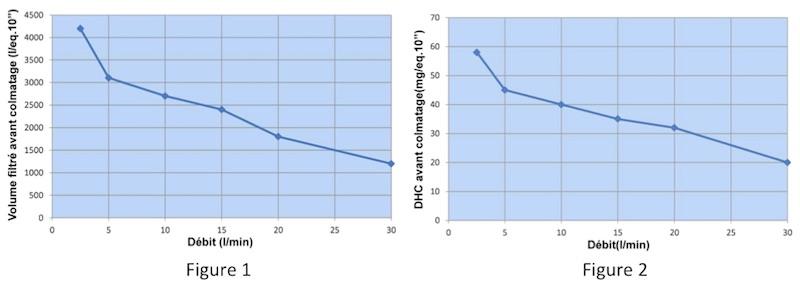
It is widely acknowledged that for a given flow rate, undersizing a filter by a factor of 2 (i.e. selecting a filter half the required size) will reduce its service life by a factor of 3.
This is NOT linear, contrary to what many believe.
Based on the example below, we can clearly see that reducing the size of a filtration system to lower installation costs will ultimately lead to higher-than-expected operating costs.
| Filter size | Unit cost | Service life | Annual cost |
|---|---|---|---|
| 20” length | 100 euros | 1 mounth | 1 200 euros |
| 40” length | 200 euros | 3 mounth | 800 euros |
In this example, incorrect sizing increases operating costs by 50%.
General recommendations for filter sizing
Filtration systems can be sized based on several factors, including initial differential pressure, concentration of insoluble material to be retained, space constraints, etc. However, flow rate is probably the most critical criterion.
We provide general guidelines for filter sizing as a function of flow rate, taking into account different filter design and manufacturing configurations (see the various tables below according to the type of beverage to be filtered).
It should be noted that this basic guidance cannot account for process-specific characteristics (which must be assessed case by case), such as:
- Viscosity and/or temperature of the liquid being filtered
- Particle load upstream of the filter
- Nature of the contaminant, e.g. solid or deformable material and/or organic / oily contamination
Beer and brewed product filtration
Beer covers a wide range of products, but these guidelines apply to both draught (keg) beer and bottled beer. Some producers pasteurise their beers to “sterilise” them. In some cases, however, pasteurisation appears to negatively affect the taste of the beer.
That’s why cold microbiological stabilisation is increasingly used — it ensures that the beer retains its unique characteristics (colour, clarity, taste, bitterness or sweetness). This is achieved using filter membranes that retain all biologically harmful microorganisms. The result depends heavily on the flow conditions applied to these membranes (and the associated pressure drop).
- Excessive flow rates affect the beer and also impair filter performance, especially service life.
- Lower flow rates always lead to optimal performance.
- A constant flow is essential — high pressures, pulsations or fluctuations can compromise filtration, potentially releasing fragile materials or dislodging colloidal matter.
Beer contains proteins and polysaccharides, which can make it “sticky”, making filtration more difficult. Yeasts and acid bacteria (lactic and acetic) can also affect the process.
Ensuring proper pre-filtration steps (pre-stabilisation of bright beers — already clarified using diatomaceous earth or plates) during filtration generally yields a refined and clarified product.
Pleated filters are a good choice when seeking biocontamination reduction or intervention at the final packaging stage.
Cold stabilisation of bright beer prior to packaging should enable the use of asymmetric submicron membranes or, for heavier beers, a submicron membrane with integrated precoat.
Filter sizing guide for beers and brewed products:
| Filter configuration | Max recommended flow rate (L/h per 10” equivalent) |
|---|---|
| Depth | 100–250 L/h/10” |
| Pleated / depth | 400–600 L/h/10” |
| High porosity gradient pleated | 300–600 L/h/10” |
| Submicron membrane | 200–400 L/h/10” |
Wine or fermented product filtration
White wines are generally considered the easiest to filter. The filtration step itself is relatively straightforward, but pre-filtration is critical. The membrane acts as the final safety barrier before packaging. If the pre-filtration stage is not properly selected and sized, the membrane will clog prematurely.
Red wines tend to have higher levels of sweet tannins, making them more resistant to deterioration (white wines are typically less resistant).
The quality of prefilters can, in many cases, act as final filters depending on customer expectations regarding shelf life and flavour. They may be looking for a simple reduction of biocontamination rather than complete removal.
A final selection using a membrane may be specified. The microorganism or spoilage agent involved will determine the pore size, but typically 0.45 µm, and sometimes 0.65 µm. Flow rates do not need to be as conservative if pre-filtration has been properly designed.
Filter sizing guide for wines and fermented products:
| Filter configuration | Max recommended flow rate (L/h per 10” equivalent) |
|---|---|
| Depth | 100–250 L/h/10” |
| Pleated / depth | 400–600 L/h/10” |
| High porosity gradient pleated | 400–700 L/h/10” |
| Submicron membrane | 500–900 L/h/10” |
Mineral water filtration
Water is easier to filter than beer or wine as mentioned above, but a good understanding of the water source and any pre-treatment will help optimise the filtration process. In general, several filter configurations may be suitable, but their combination will always be key to ensuring optimal service life.
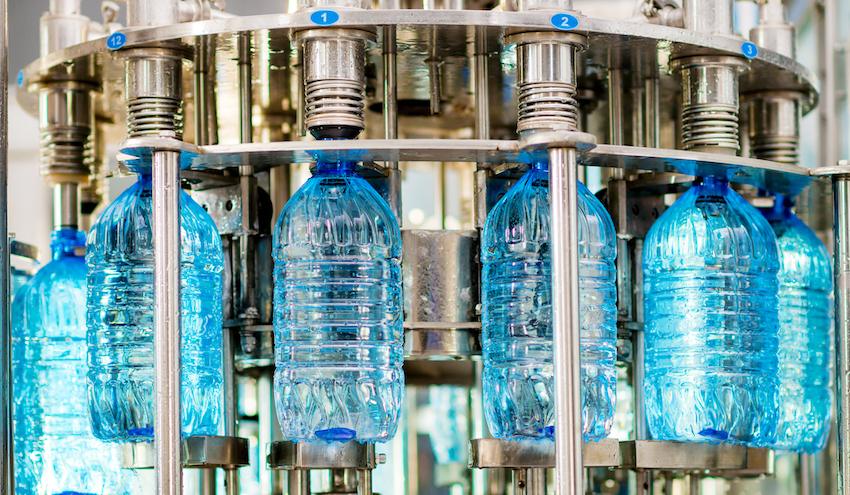
Mineral waters are generally filtered (where permitted) at 0.2 µm so that the product remains stable both for consumer protection and for shelf life. Ideally, any membrane will work – so what are their requirements?
Highly asymmetric membranes are the ideal product. These are strong and robust membranes capable of withstanding different types and cycles of sanitisation. To properly protect these membranes, filters combining pleating and depth are the best pre-filtration solution for mineral waters.
Filter sizing guide for mineral waters:
| Filter configuration | Max recommended flow rate (L/h per 10” equivalent) |
|---|---|
| Depth | 200–500 L/h/10” |
| Pleated / depth | 600–1 200 L/h/10” |
| Submicron membrane | 500–1 000 L/h/10” |

Contact a filtration expert
We are at your service
Our experts place their knowledge and expertise at your disposal for liquid filtration, air and gas filtration, decontamination, and separation technologies.