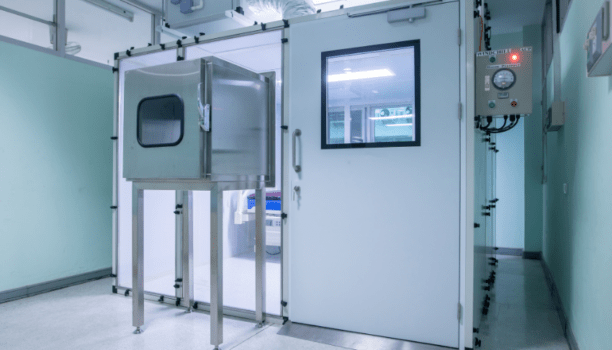
What is it about?
A cleanroom is a space in which the concentration of airborne particles, as well as temperature and humidity, must be strictly controlled. Particulate and microbiological contamination must therefore be managed, whether it originates from outside or from the cleanroom itself.
Filtering air in cleanrooms means:
• Complying with clearly defined standards
• Protecting production, the environment, and personnel
• Carefully defining the required efficiencies
• Addressing both outdoor air and recirculated air
Where does the contamination come from?
It originates from various sources. The primary source of contamination comes from outdoor air. The second is due to the installations, generated by the equipment in place. Finally, the third source, and undoubtedly the most significant, is human presence. Protective equipment aims to control the spread of contamination, without completely eliminating all sources of pollution.
The objective of cleanroom filtration is therefore both to contain external contamination and to eliminate pollutants generated within the cleanroom itself.
Which standard should be used as a reference?
The applicable standard is ISO 14644-1. It specifies the classification of air cleanliness in cleanrooms, clean zones, and separative devices.
Comprising eight parts, the cleanroom user must therefore define the required cleanliness level according to the intended use. It should be noted that the lower the ISO class number, the better the air quality.
Depending on whether the air circulates throughout the room or is managed within a restricted area (Point of Use – POU), two types of airflow are defined by standard (EN ISO 14644-6): turbulent flow and laminar flow.
QUELS SONT LES TYPES DE FILTRES ADAPTÉS AUX SALLES BLANCHES ?
An air handling unit (AHU) supplies the cleanroom with “fresh air”. The incoming air must be purified by an air filtration system.
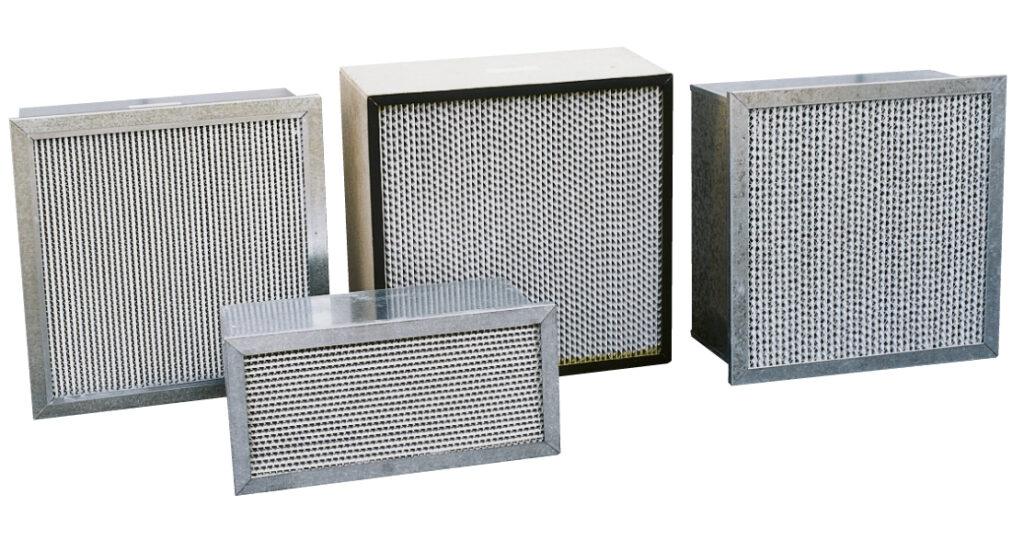
An air handling unit (AHU) supplies the cleanroom with “fresh air”. The incoming air must be purified by an air filtration system.
In the majority of air treatment installations, a first stage of filtration of coarse or fine dust is implemented; this is referred to as prefiltration.
The former European standard EN 773 classified these filters as G filters or F filters.
Also known as primary (coarse) filtration, this filtration stage is used for air conditioning and to protect higher-efficiency filters.
This is followed by so-called fine filtration, with a very broad field of application, one of whose objectives is the protection of absolute filters.
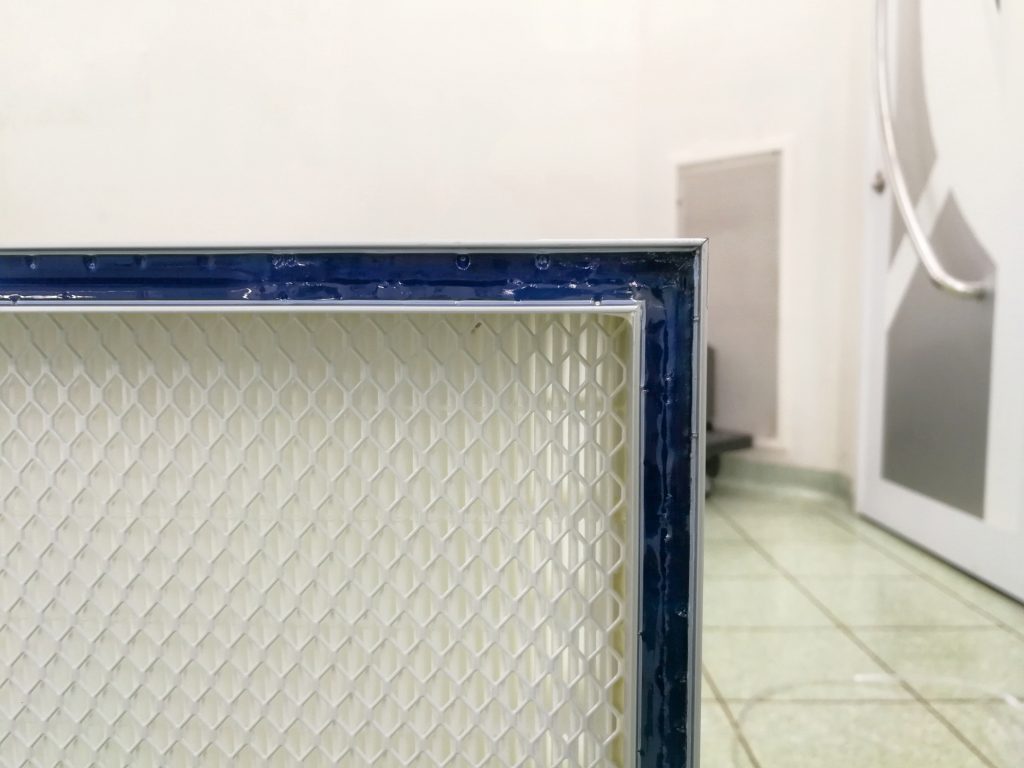
The final filters, consistent with the target cleanroom class, are HEPA filters (H14) or ULPA filters (U15 to U17).
For these filters, this represents the highest level of filtration achievable. This product range is classified as absolute filters.
The MPPS filtration efficiency (“Most Penetrating Particle Size” – the particle size that is most difficult to capture) is greater than 85%, 99.95%, and for the most efficient models greater than 99.995%.
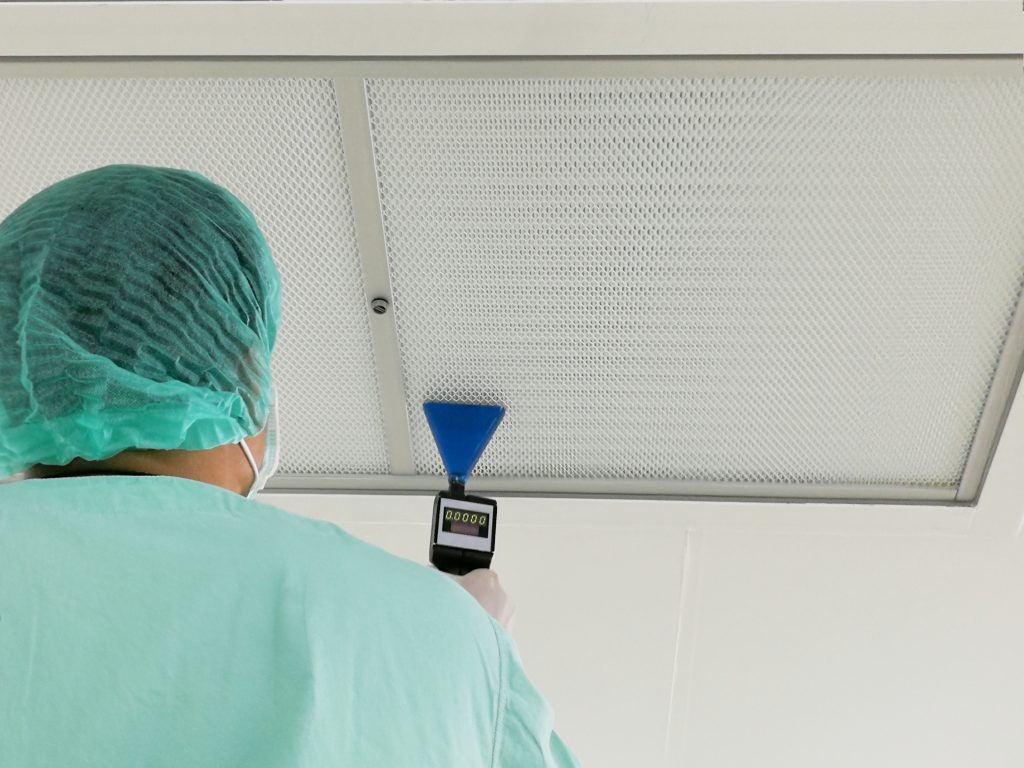
These filters can be installed outside the cleanroom and are also positioned as close as possible to each sensitive zone.
By selecting the appropriate final air filter, the air filtration system will ensure the introduction of “clean” air into the cleanroom. In addition, a filtration system must also be sized to treat the indoor air, referred to as “recirculated air.”
Focus on electronics
The electronics industry is particularly demanding in terms of clean environments. Contaminants present in the air of cleanrooms or at the point of use can degrade the quality of electronic components.
Learn more in our article on filters used in the manufacturing of solar panels and LED screens:
Filtration in solar panels and LED screens

Contact a filtration expert
We are at your service
Our experts place their knowledge and expertise at your disposal for liquid filtration, air and gas filtration, decontamination, and separation technologies.