Stagnant water and bacterial proliferation
On API production lines or food production lines, but also in healthcare facilities and, more generally, in public buildings, the water used may be contaminated by pathogens of various origins. These may include microorganisms such as salmonella and enteroviruses, generally originating from the public water distribution network.
Contamination may also be caused by opportunistic bacteria such as legionella, naturally present in cold water in very small quantities, which proliferate in hot water circuits, particularly when the water temperature ranges between 25 and 45 °C, with an optimum between 32 and 35 °C. It should be noted that if water is stagnant and/or contains scale, corrosion elements (iron, zinc) or other microorganisms capable of providing the nutrients required for legionella metabolism, their development is promoted.
In addition to legionella, other bacteria originating from the industrial or hospital environment,
circulating or trapped within the biofilm, may threaten the safety of medical water systems or industrial installations. These may include, for example:
– Pseudomonas aeruginosa, or pyocyanic bacilli, responsible for nosocomial infections, which develop in humid environments and are highly resistant to most antiseptics;
– non-tuberculous mycobacteria, which can cause pulmonary, cutaneous or lymphatic infections and lead to infections in immunocompromised patients.
Their proliferation is also particularly significant in stagnant water (dead legs, pipe ends, tanks, tap aerators, etc.).
It is therefore necessary to limit as much as possible the formation of biofilm, this thin layer containing microorganisms (bacteria, algae, fungi, etc.) that coats the internal surfaces of installations.
Find out more about biofilm
Limiting bacterial risk
To limit the risk of bacterial proliferation in stagnant water, it is necessary to optimise your processes and make adjustments to your installation:
– limit the phenomenon of stagnation itself: review, where possible, the geometry of the installation, paying particular attention to areas where flow is insufficient, and avoid water stagnation within installations when they are not in use;
– prevent bacterial contamination within the water circuit and biofilm development: carefully select the materials used for pipes, seals, fittings, taps, shower heads, etc., and ensure appropriate surface finishes; implement decontamination processes, control water temperature, apply UV treatments, etc.
Implement terminal filtration
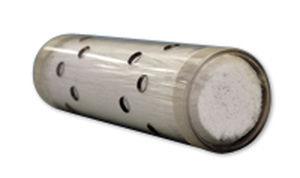
In addition to these measures, it is advisable to equip the most sensitive points of your installation with high-performance antibacterial filters. On taps used for hand hygiene, a terminal sterile filter can be installed. For wall-mounted or handheld showers, various devices can be implemented depending on the configuration (antibacterial hoses and shower heads). More generally, this terminal filtration can be achieved using two types of equipment: pleated filter membranes or hollow fibre membranes made of polysulfone, nylon, PVDF or polypropylene. The water to be treated passes through the filter medium under the effect of a pressure differential across the membrane. Bacteria and suspended solids larger than 0.1 µm absolute (for sterilising-grade hollow fibre membranes) are thus trapped on the external surface of the membrane.
Compared with pleated membranes, hollow fibre membranes offer a filtration surface area multiplied by 2 or 3, making it possible to design particularly compact filtration devices, facilitating, for example, their installation on existing taps or at the end of production lines.
This increased filtration surface area also makes it possible to adopt a lower filtration rating (thereby ensuring better antibacterial protection) without reducing flow rate, and thus to ultimately increase filtration efficiency (for example using 0.1 instead of 0.2 µm), or to increase flow rate without increasing pressure drop.
The capacity to retain bacteria and impurities is also significantly greater than that of conventional membranes, which delays clogging of these filters and extends their service life.
Find out more about hollow fibre membrane technology
Find out more about medical water filtration

Contact a filtration expert
We are at your service
Our experts place their knowledge and expertise at your disposal for liquid filtration, air and gas filtration, decontamination, and separation technologies.