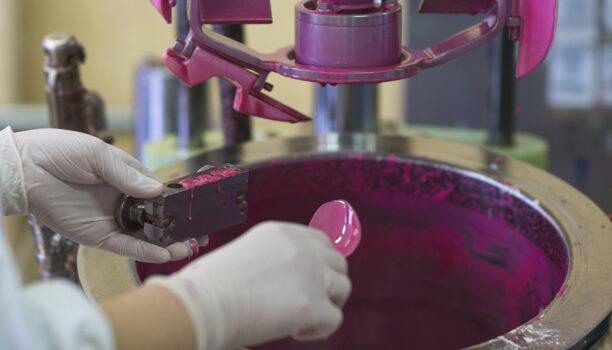
Inks, lacquers, paints, varnishes, and resins are used for decorative, protective, or surface-preparation purposes. Paint and ink filtration processes are implemented at various stages of the manufacturing of these complex products.
High quality requirements for paint and ink filtration
The final products must be free of contaminants such as fibres, solid particles, or deformable particles. To achieve this, it is essential to monitor upstream the contamination levels of paints and inks and of key intermediates (solvents, premixes, etc.). This approach helps control the overall paint-filtration costs, ensures that quality targets are met, and keeps product non-conformities to a minimum. For example, in the case of inks used for inkjet printing, high-quality ink filtration helps reduce blockages in printheads or fine nozzles. It enables the customer to increase productivity by ensuring high printing speeds and shorter production times, reducing maintenance needs, improving print quality, and ultimately minimising costs.
Expert advice
To prevent nozzle clogging and fouling of application rollers, or to eliminate bubbles generated during mixing or pumping operations, appropriate filtration is essential. Filtration also ensures consistent colourimetry.
Filtering paints and inks: a demanding set of requirements
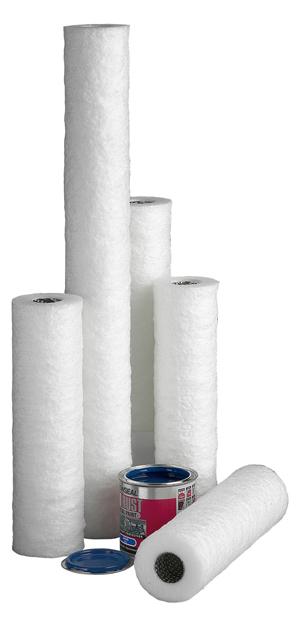
The solutions used for paint and ink filtration must meet a highly demanding set of requirements. They must be able to remove solid contaminants, agglomerates, and gels while not retaining the pigments. This requires the use of highly selective, highly classifying, and perfectly reproducible filtration media.
The filtration systems must also be capable of handling very viscous liquids (several thousand centipoise) while keeping pressure drop under control. Some inks, such as magnetic inks, have a relatively high viscosity, around 200 to 300 cP.
The filtration media must additionally be chemically compatible with the solvents used during synthesis steps. Finally, the filtration devices must ensure safe working conditions for the operators who handle these products.
To learn more about filtering magnetic inks, see a concrete case study here: Ink filtration: an example for improving magnetic ink filtration
Expert advice
If toluene or xylene is used as the solvent, a nylon filter cartridge must be preferred. Polypropylene filter cartridges are not chemically compatible with these solvents.
Developing tailored filtration solutions

In the case of ink manufacturing for inkjet printing, the process begins with the production of a “concentrate”, made of colorants and dispersants in a medium, which is then used to produce multiple batches. Additional raw materials (other fluid media, surfactants, chemical stabilisers) are added and mixed to produce bulk ink, which is prefiltered. Series filtration, using filters with decreasing micron ratings—for example 10, 5, and 1 µm—then makes it possible to obtain the finished ink.
To meet operator safety requirements, reduce cleaning operations, and avoid cross-contamination risks, systems using standard filter cartridges enclosed in sealed plastic bags can be implemented. The filter and product are then fully isolated. The plastic sleeves prevent the filtered product from contacting the housing, which therefore does not need to be cleaned between filter changes. The sleeves surrounding the filter cartridges can also serve as containers for storing the filters when reuse is desirable. This is particularly useful in facilities producing inks of different colours in small, occasional batches: filters contaminated by a given colour can be labelled and stored for future reuse.

Contact a filtration expert
We are at your service
Our experts place their knowledge and expertise at your disposal for liquid filtration, air and gas filtration, decontamination, and separation technologies.