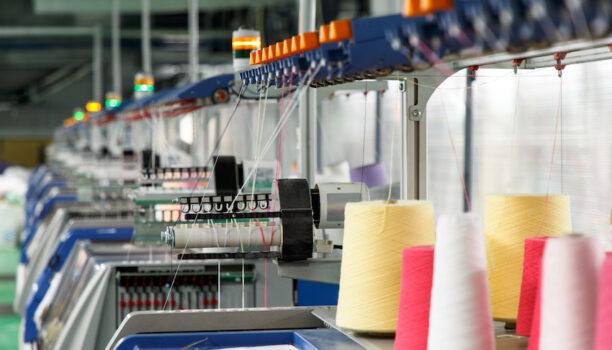
Polyamide 6.6 fibers are found in many everyday products. Examples include textiles in the broad sense, carpets, guitar strings, components in cars (tires, fuel tanks, etc.), electrical insulation parts, and more.
The filtration of Nylon Salt: a qualitative and economic challenge
The industry producing polyamide fibers has evolved significantly over the past 50 years, and polymerization processes are now well established and fully controlled. This sector has consistently sought methods to optimize production, reduce fiber breakage, and improve intrinsic fiber properties. The ongoing challenge is to manufacture fibers that are increasingly finer while becoming stronger. Studies have made it possible, based on expected production performance, to determine—for each fluid used—their required cleanliness levels in a “new” state, as well as to classify the size and type of contaminants typically present.
Fiber manufacturing process and filtration stages
The main base component used in the manufacture of polyamide 6.6 fibers is Nylon Salt, commonly referred to as “Salt N.” It appears as a colorless saline solution. This salt is then polymerized, which involves evaporating the water from the saline solution to form the salt into a polyamide paste block with sufficient viscosity to pass through spinnerets, allowing the creation of filaments. Once cooled, these filaments are drawn on a stretching line until the desired fiber sizes are obtained.
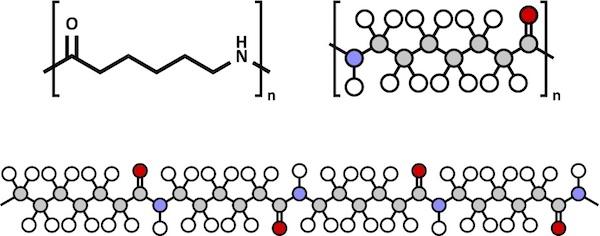
It has been established that the presence of particles, even at low concentrations, can directly deteriorate the uniformity of polymer quality and reduce its service life. Whether contaminants are extrinsic (for example, DI water has been identified as a vector of contamination) or generated by the process itself, the filtration of the various feed streams has become an integral stage in the production of polyamide 6.6.
Naturally, the efficiency and reproducibility of the filters used are essential. To eliminate any uncertainty regarding filtration performance, “absolute” filters are required. In addition to being completely reproducible in their manufacturing, they offer an efficiency greater than 99.98%.
But at what threshold should we filter?
Analyses by optical microscopy and X-ray spectrometry have shown that the particle size present in the fluids to be filtered ranges between 0.5 µm and 40 µm. However, the vast majority, around 90%, lies between 1 and 10 µm.
The main contaminants (DI water, Salt N) are iron, silica and polymeric species.
It is easy to understand why it is essential to tightly control—and to validate with your supplier—the filtration efficiency. Filters can still be found rated at 1 µm with no specification of the associated efficiency. The studies we have carried out in-house show that these filters (depending on the manufacturing batches) are actually absolute between 20 and 40 µm, for a claimed 1 µm rating!
But where should these filters be integrated into the process?
- The first source of contamination comes from the components used to prepare the Nylon Salt solution. Based on the observations above, the appropriate recommendation should be 1 µm with a minimum efficiency of 99.98%.
- Contamination levels in the nylon salt solution can vary significantly. In some cases, plate filters and/or frame filters followed by disposable polishing filters are used. For highly contaminated saline solutions, we recommend installing depth filters sequentially to meet the required improvements in product quality and spinning performance. This notion of “highly” contaminated must be assessed case by case, but the purpose of these filters is to retain insolubles such as metal oxides and other extrinsic contaminants, which reduce polymerization efficiency and therefore fiber quality.
- The make-up water must also be filtered before being mixed with titanium dioxide at around 10 µm with absolute efficiency. The slurry is then filtered between 10 and 20 µm, again with absolute efficiency. This filtration step prevents the passage of large particles that could reduce tensile strength and the quality of the finished fiber.
- The final filtration before transfer to the drawing lines typically consists of pleated metallic high-pressure filter elements, selected according to the decitex of the fiber produced. For the finest nylon fibers, 10 µm absolute filtration is recommended. Fine stainless-steel fiber media offer the best guarantee of superior nylon fiber quality and enable high production speeds while remaining close to “zero defects.”
- Finally, at the drawing trains, metal screens are commonly used to remove large particles and gels that could clog the spinneret. When operating conditions allow it—particularly regarding pressure drop at the production flow rate—fine stainless-steel fiber media provide a solution that ensures high reproducibility and consistent production quality.

Summary
To obtain high-quality fibers and optimize productivity, the polymer must be highly homogeneous, free of gels and additive agglomerates. In the process, the filtration of primary fluids, the filtration of slurries, and the filtration of molten polymers are critical steps. The careful attention given to these elements helps eliminate fiber breakage and improves fiber strength and uniformity. Beyond the quality of the fibers produced, production rates also increase, with reduced process downtime—representing a major economic benefit.

Contact a filtration expert
We are at your service
Our experts place their knowledge and expertise at your disposal for liquid filtration, air and gas filtration, decontamination, and separation technologies.