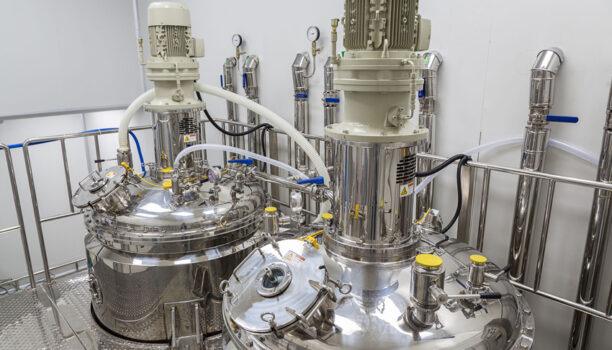
To eliminate coloured impurities generated in the reactor during the synthesis of pharmaceutical active ingredients, activated carbon is used.
Composed of porous carbon-based material that retains unwanted molecules through adsorption, it enables the purification and decolourisation of synthesised products.
Activated carbon can either be added directly into the reactor before filtration, or — more effectively — used as the filter media within a dedicated filtration system.
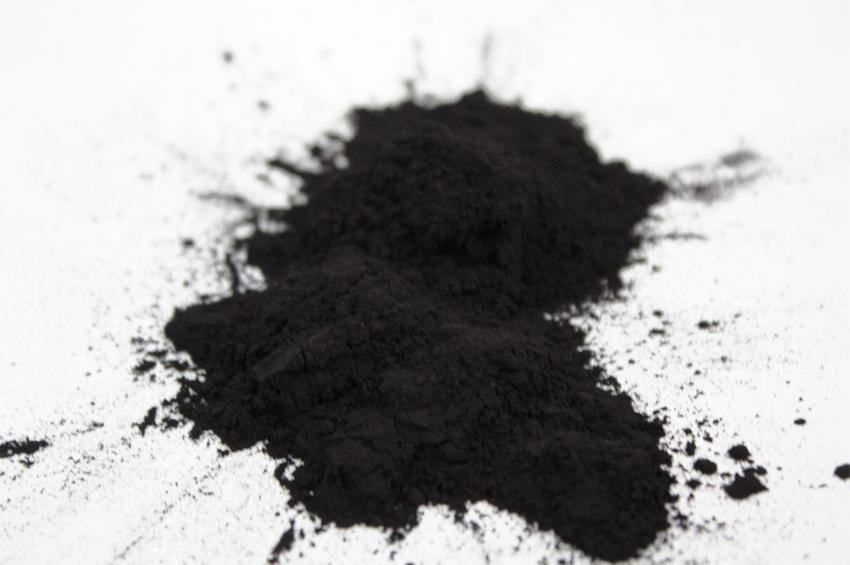
Filtration using loose activated carbon
The conventional technique consists of adding loose activated carbon directly into the reactor once the API synthesis is complete, then filtering out the carbon saturated with impurities.
Depending on the quantity and particle size of the carbon used, this second stage can be performed using a combination of standard filter bags and cartridges, or high-performance filter bags, which are essential for handling fine carbon particles.
These high-performance bags are made up of multiple layers of non-woven polymer, up to 8 layers. To optimise particle size distribution and ultimately extend the filter bags’ service life, the different layers are arranged with increasing density in the direction of flow.
The removal efficiency reaches 99.98 %.
Selecting the right filter bag geometry for filtering loose activated carbon
Care must be taken when choosing the geometry of the filter bags used to recover loose activated carbon from the reactor. Conical bags should be preferred over cylindrical ones to facilitate extraction at the end of the purification/decolourisation phase.
Carbon particles — typically just a few microns in size — tend to compact at the bottom of the bag, carried downwards by the fluid during filtration. Combined with the differential pressure, which pushes the bag firmly against its support basket, this effect can make extraction difficult at the end of the process, sometimes even causing tearing of cylindrical bags.
This results in cumbersome cleaning operations and an additional exposure risk for operators.
With a conical bag, the carbon distributes more evenly, and it becomes much easier to detach the bag from its support without tearing it.
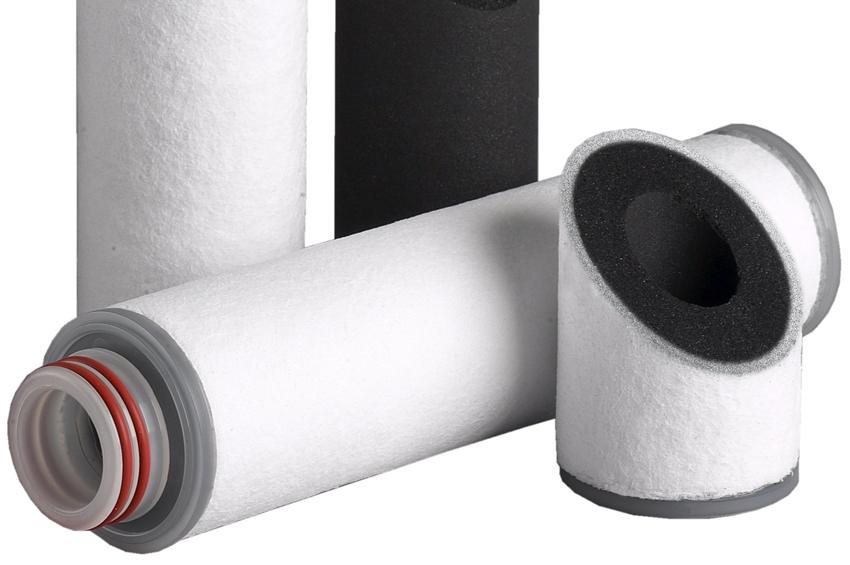
Using filter elements incorporating activated carbon
Instead of using loose activated carbon, it is possible to use filter cartridges or lenticular modules featuring activated carbon media. These alternatives eliminate the need to handle powdered carbon and the subsequent filtration required to recover it from the reactor.
More compact, cleaner and easier to handle, these devices are also more economical. They are manufactured using high-purity activated carbon, such as Norit® grade SX Ultra. Suitable for pharmaceutical applications, this carbon also meets the requirements of the Food Chemical Codex.
Particular attention must be paid to the fluid flow rate through these elements, to optimise filtration quality without excessively slowing down the API production process.

Contact a filtration expert
We are at your service
Our experts place their knowledge and expertise at your disposal for liquid filtration, air and gas filtration, decontamination, and separation technologies.